Sports and fitness
Sports and fitness encompass far more than isolated workouts or weekend competitions. They represent a comprehensive approach to human performance that integrates physical conditioning, mental resilience, nutritional optimization, and intelligent recovery. Whether you’re preparing for demanding outdoor adventures, rehabilitating an injury, or simply seeking to maintain vitality as you age, understanding the interconnected systems that drive athletic development is essential.
This resource explores the foundational principles that underpin sustainable fitness across diverse contexts—from cardiovascular efficiency protocols for busy professionals to altitude acclimatization strategies for mountaineers, from water-based rehabilitation techniques to the psychological mechanisms that transform physical training into mental fortitude. The goal is to provide a holistic framework that empowers you to make informed decisions about your training, recovery, and long-term athletic health.
Building Your Training Foundation: Balance and Sustainability
The cornerstone of any effective fitness program lies in understanding the delicate equilibrium between different training modalities and recognizing the early warning signs of excessive stress. Many athletes, particularly beginners, fall into the trap of believing that more is always better—a misconception that often leads to plateau, injury, or burnout.
Balancing Cardiovascular and Strength Training
The debate between cardio and strength training represents a false dichotomy. Both systems serve complementary functions in human performance. Cardiovascular training enhances oxygen delivery, metabolic efficiency, and endurance capacity, while strength training builds structural integrity, power output, and metabolic rate at rest. Research consistently demonstrates that athletes who integrate both modalities experience superior outcomes compared to those who specialize exclusively.
A practical approach for intermediate athletes might allocate training volume in a 60/40 or 50/50 ratio, depending on specific goals. Endurance athletes preparing for long-distance events might emphasize cardiovascular work while maintaining foundational strength sessions twice weekly. Conversely, those focused on power development or body composition should prioritize resistance training while incorporating two to three cardiovascular sessions to support recovery and cardiac health.
Recognizing and Preventing Overtraining
Overtraining syndrome represents one of the most overlooked risks in fitness culture. Unlike acute fatigue, which resolves with a few days of rest, overtraining manifests as a systemic breakdown characterized by:
- Persistent elevation in resting heart rate (5-10 beats above baseline)
- Declining performance despite maintained or increased training volume
- Sleep disruption, mood changes, and increased susceptibility to illness
- Loss of motivation and prolonged muscle soreness
Prevention requires deliberate periodization—structuring training in cycles that alternate between stress and recovery. A simple framework involves three weeks of progressive loading followed by one deload week at 50-60% normal volume. This rhythm allows physiological adaptations to consolidate while preventing the cumulative fatigue that leads to overtraining.
The Mental Dimension of Athletic Performance
Physical training serves as a powerful catalyst for mental development, offering benefits that extend far beyond the gym or trail. The discipline, focus, and resilience cultivated through consistent training transfer directly to professional challenges, creative pursuits, and emotional regulation.
Flow States and Enhanced Focus
Flow—that state of complete absorption where effort feels effortless—represents the pinnacle of human performance. Athletes experience this during perfectly paced runs, climbers find it on challenging routes, and swimmers enter it during rhythmic laps. The conditions that facilitate flow include clear goals, immediate feedback, and a balance between challenge and skill level.
To deliberately induce flow during training, select activities that sit just beyond your current comfort zone. Too easy, and boredom sets in; too difficult, and anxiety dominates. This “Goldilocks zone” of challenge—roughly 4% above your current capacity—creates the conditions for deep engagement and skill development.
Goal Setting Psychology and Burnout Recovery
Effective goal architecture requires balancing ambitious outcome targets with process-oriented milestones. Rather than fixating exclusively on running a marathon, establish weekly training completion rates, monthly distance benchmarks, and quarterly strength assessments. This approach provides regular psychological wins that sustain motivation during the inevitable plateaus.
When burnout does occur—and it will for any athlete pursuing long-term development—recovery demands more than physical rest. Consider cross-training in entirely different movement domains, reducing training volume by 40-60% for two to four weeks, or temporarily shifting focus to skill acquisition rather than performance metrics. The goal is to rekindle intrinsic enjoyment rather than grinding through obligation.
Recovery: The Hidden Driver of Progress
Training stimulus alone does not drive adaptation—recovery does. The workouts you complete create a stress signal; the adaptations you seek occur during the hours and days of rest that follow. Optimizing recovery processes through sleep, nutrition, and active restoration techniques often yields greater performance gains than increasing training volume.
Sleep Architecture and Biological Repair
Sleep serves as the master regulator of recovery, governing hormone production, tissue repair, memory consolidation, and immune function. Athletes require 7.5 to 9 hours of quality sleep nightly, with particular emphasis on deep sleep (stages 3-4) and REM cycles. During deep sleep, growth hormone secretion peaks, facilitating muscle repair and adaptation. REM sleep consolidates motor learning and skill acquisition.
To optimize sleep quality, maintain consistent sleep and wake times (even on weekends), ensure complete darkness in your sleeping environment, and keep bedroom temperature between 60-67°F (15-19°C). Avoid intense training within three hours of bedtime, as elevated core temperature and cortisol can delay sleep onset.
Nutrition Timing, Hydration and Active Recovery
The concept of precise protein timing—the idea that you must consume protein within a narrow post-workout window—has been largely debunked by recent research. What matters more is total daily protein intake (0.7-1.0 grams per pound of body weight for active individuals) distributed across three to four meals. This distribution optimizes muscle protein synthesis throughout the day rather than creating a single spike.
Hydration extends beyond simple fluid replacement. Electrolyte balance—particularly sodium, potassium, and magnesium—determines cellular function and performance capacity. Athletes training for more than 90 minutes or in hot conditions should consume beverages containing 300-700mg sodium per liter to maintain plasma volume and prevent hyponatremia.
Active recovery tools—foam rolling, light swimming, yoga, or walking—promote blood flow to damaged tissues without imposing significant training stress. These modalities can accelerate recovery when performed at genuinely low intensities (conversation should feel effortless), but become counterproductive when intensity creeps upward.
Training in Challenging Environments
Environmental stressors—altitude, cold, heat, technical terrain—impose additional physiological demands that require specific adaptation strategies. Understanding these mechanisms allows athletes to prepare intelligently and minimize risk.
Altitude exposure triggers a cascade of adaptations beginning with increased breathing rate and progressing to elevated red blood cell production over weeks. Acute mountain sickness typically manifests above 8,000 feet (2,400m) in unacclimatized individuals. Effective acclimatization follows the “climb high, sleep low” principle, with gradual ascent rates of 1,000-1,500 feet (300-450m) of sleeping elevation gain per day above 10,000 feet.
Cold weather training offers unexpected advantages: enhanced caloric expenditure (shivering thermogenesis can increase metabolic rate by 40-50%), improved mental resilience, and reduced inflammatory responses. However, proper layering systems—base layer for moisture management, insulation layer for warmth retention, and shell layer for wind and precipitation protection—become essential for safety during shoulder-season mountain activities.
Technical terrain mastery requires skills beyond pure fitness: footwear selection appropriate to conditions, efficient uphill biomechanics that preserve energy, hydration logistics that balance weight and necessity, and navigation competency. Wildlife safety awareness and avalanche risk assessment represent non-negotiable competencies for backcountry athletes.
Water-Based Training for Rehabilitation and Low-Impact Fitness
Aquatic environments provide unique training opportunities, particularly for athletes managing injuries, chronic pain, or seeking low-impact cardiovascular development. Water’s buoyancy reduces joint loading to approximately 10-20% of body weight when submerged to chest level, while its resistance provides omnidirectional strengthening.
For individuals with chronic back pain, specific aquatic techniques—such as flutter kicking with a board to engage core stabilizers without spinal compression—offer therapeutic benefits. Cold water immersion (50-59°F / 10-15°C) for 10-15 minutes post-training may reduce muscle soreness and accelerate recovery, though the evidence remains mixed and individual responses vary considerably.
Practical considerations include ear protection for frequent swimmers (custom-molded plugs prevent infection), chlorine management strategies (immediate post-swim rinsing, moisturizer application), and equipment utilization (pull buoys, kickboards, fins) to target specific muscle groups or movement patterns.
Cardiovascular Efficiency for Time-Constrained Athletes
Modern lifestyles rarely accommodate two-hour training blocks, yet cardiovascular fitness remains non-negotiable for health and performance. High-intensity interval training (HIIT) and strategic protocol selection allow meaningful adaptations in condensed timeframes.
A well-designed 20-minute session combining warm-up, intervals, and cool-down can generate similar or superior cardiovascular adaptations compared to longer moderate-intensity efforts. The fasted cardio debate—whether training before breakfast enhances fat oxidation—matters less than total daily energy balance and training consistency. For most athletes, training in a fed state improves workout quality and prevents muscle catabolism.
Heart rate variability (HRV)—the variation in time between heartbeats—serves as a powerful readiness indicator. Elevated HRV suggests recovery and readiness for intense training, while suppressed HRV indicates accumulated fatigue and the need for lighter sessions. Equipment-free options like stair protocols, bodyweight circuits, or lunch-break walks eliminate barriers to consistency.
Sustaining Performance Through Aging
Aging does not require performance decline if athletes address the specific physiological changes that occur across decades. Sarcopenia—age-related muscle loss—begins around age 30 and accelerates after 60, but resistance training completely prevents or reverses this process. Adults maintaining consistent strength training preserve muscle mass, metabolic rate, and functional independence.
Bone density maintenance requires weight-bearing impact activities that signal skeletal adaptation. Walking and cycling, while valuable for cardiovascular health, provide insufficient stimulus. Activities like running, jumping, or resistance training generate the mechanical stress necessary to maintain bone mineral density and prevent osteoporosis.
The flexibility versus strength debate represents another false choice—both qualities decline with age and both respond to training. However, strength training appears more protective against falls, fractures, and functional limitations. The cognitive-movement connection—the link between physical activity and preserved brain function—grows stronger with each passing decade, with regular exercisers demonstrating significantly lower rates of cognitive decline and dementia.
Balance mechanics become increasingly important as vestibular and proprioceptive systems gradually decline. Simple practices—single-leg stands during daily activities, eyes-closed balance work, or movement disciplines like tai chi—maintain the neural pathways that prevent falls and preserve confidence in varied terrain.
Sports and fitness represent a lifelong practice that adapts to changing goals, environments, and capabilities. The principles outlined here—balanced training, mental integration, recovery optimization, environmental adaptation, and age-appropriate programming—provide a framework for sustainable development. As you deepen your practice, each component becomes interconnected: strength supports endurance, recovery enables consistency, mental skills enhance physical output, and intelligent programming preserves longevity. The journey from novice to experienced athlete is less about reaching a destination than about continuously refining your understanding of what your body and mind can achieve.

Mobility for Longevity: Exercises to Prevent the “Shuffle” After 60?
The key to avoiding age-related mobility decline is not gentle activity, but proactively training for strength, power, and stability to build a robust physiological reserve. Heavy lifting and impact exercises are not only safe but essential for maintaining bone density…
Read more
The Biology of Repair: Muscles Grow During Sleep, Not in the Gym
The biggest lie in fitness is that growth happens in the gym; in reality, it’s a precise biological repair process you’re likely sabotaging. The “anabolic window” is a 24-hour process, not a 30-minute sprint. Muscle recovery is dictated by hormonal…
Read more
HIIT vs. LISS: Which Cardio Protocol Burns More Fat in Less Time?
The most effective cardio protocol isn’t HIIT or LISS; it’s the one that matches your body’s daily readiness for stress. High-Intensity Interval Training (HIIT) is a high-reward tool best used when you are fully recovered and energized. Low-Intensity Steady-State (LISS)…
Read more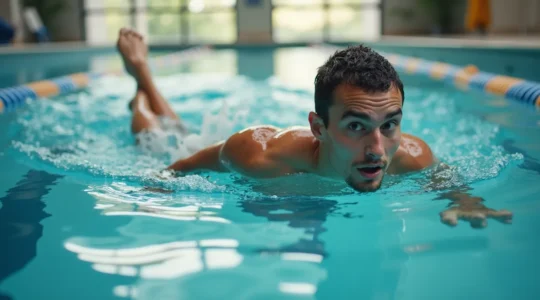
Swimming for Rehabilitation: How to Heal Joint Injuries and Rebuild Strength Without Impact
Aquatic therapy is a clinical tool for joint recovery, but only when approached with a specific methodology that goes far beyond simply floating. Success depends on mastering the water’s properties—resistance, pressure, and temperature—to stimulate healing without causing secondary harm. Incorrect…
Read more
Transitioning from Road to Trail: A Biomechanical Guide to Preventing Ankle Sprains
Preventing ankle sprains on the trail has little to do with ankle-specific exercises and everything to do with re-engineering your body’s entire kinetic chain. True stability comes from strong, responsive hips and glutes, which control leg placement and absorb impact….
Read more
Training for Mental Toughness: How Athletic Discipline Conquers Anxiety?
The key to conquering anxiety isn’t just exercising, but transforming your workouts into a deliberate practice for mental resilience. Physical stress from training teaches your nervous system to better handle psychological stress at work. Specific drills, like balancing, directly sharpen…
Read more
Shoulder Season Hiking: A Mountain Rescue Guide to Essential Gear and Unseen Dangers
Many hikers believe that slightly colder weather just requires an extra jacket. This is a dangerous misconception. The reality is that shoulder season introduces a new set of physical laws where your trusted summer habits and gear become liabilities. The…
Read more
The Best Low-Impact Outdoor Activities That Burn the Most Calories
For beginners, maximizing calorie burn without joint pain isn’t about choosing a specific activity, but mastering the how: the technique, intensity, and metabolic state you train in. Engaging more muscle groups (like with Nordic walking) dramatically increases energy expenditure at…
Read more
How to Train for High-Altitude Trekking When You Live at Sea Level
In summary: Success at altitude isn’t about generic fitness; it’s about training for oxygen efficiency and descent-specific strength. Simulate mountain conditions in a city using weighted stair climbing with a focus on long-duration sessions. Prioritize eccentric leg strength (controlled descents)…
Read more