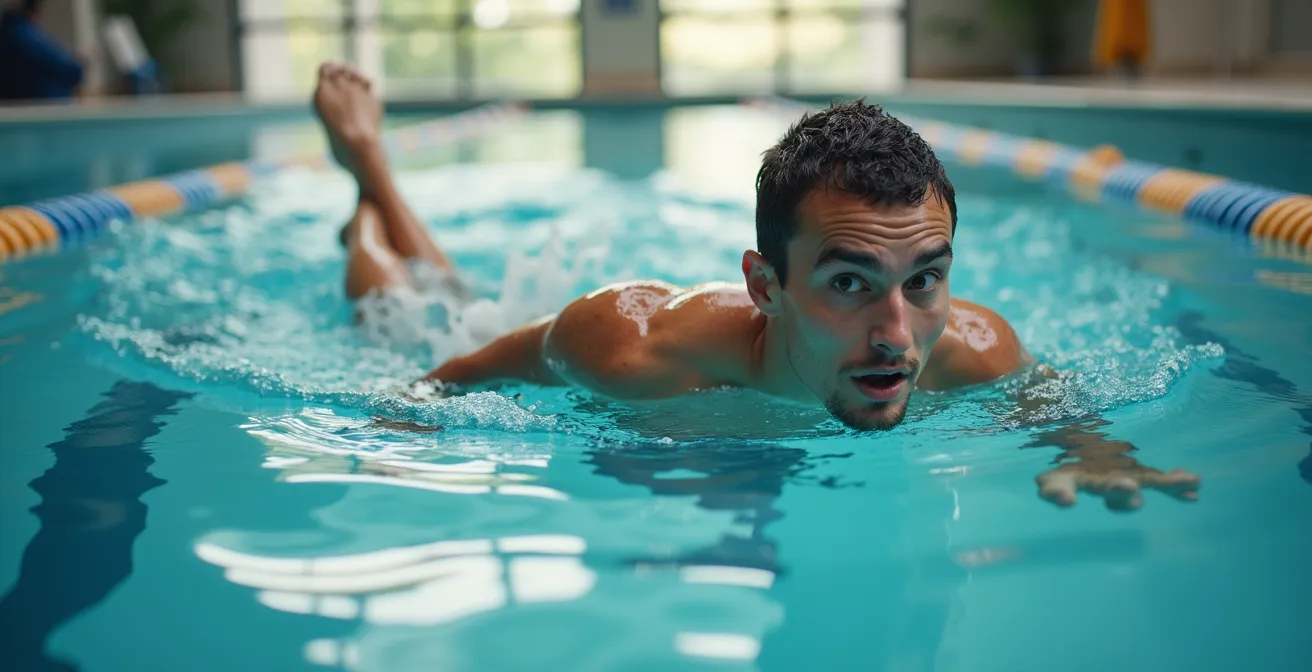
Aquatic therapy is a clinical tool for joint recovery, but only when approached with a specific methodology that goes far beyond simply floating.
- Success depends on mastering the water’s properties—resistance, pressure, and temperature—to stimulate healing without causing secondary harm.
- Incorrect form, poor hygiene, or the wrong water temperature can actively hinder rehabilitation and create new problems like chronic pain or infections.
Recommendation: Use the principles in this guide to transform your time in the pool from generic exercise into a targeted, effective rehabilitation program, and discuss them with your physical therapist.
For a former athlete, the diagnosis of a significant joint injury can feel like a life sentence, sidelining you from the activities that define you. The sharp pain in your knee or the persistent ache in your lower back becomes a constant reminder of limitations. The common advice is often to switch to “low-impact” activities, with swimming universally praised as the gold standard. The idea of floating weightlessly, free from the jarring forces of running or lifting, is undeniably appealing.
However, the conventional wisdom that “swimming is good for you” is a dangerous oversimplification. While the buoyancy of water is a powerful ally, it is only one piece of the puzzle. Treating the pool as a simple substitute for the track or gym, without understanding its unique therapeutic principles, can lead to stagnation or even new injuries. The real key to recovery isn’t just about reducing impact; it’s about leveraging the water’s properties as a precise medical instrument.
This guide moves beyond the platitudes. We will explore aquatic rehabilitation through the lens of a hydrotherapy specialist, focusing on the critical details that transform swimming from a casual activity into a powerful modality for healing. We will dissect the mechanics of how water facilitates repair, why certain strokes can be detrimental, and how to create a safe and effective environment for your recovery. This is about mastering the science of water to not only heal your current injury but to rebuild a stronger, more resilient body for the future.
This article provides a structured approach to aquatic rehabilitation, detailing the specific techniques and precautions necessary for a safe and effective recovery. Below is a summary of the key areas we will cover to help you navigate your healing journey in the water.
Summary: A Specialist’s Guide to Aquatic Rehabilitation
- Why Breaststroke Might Worsen Lower Back Pain and What to Swim Instead?
- Cold Water Swimming: Does It Really Boost the Immune System?
- Swimmer’s Ear: How to Prevent Infection in Public Pools?
- Skin Care for Swimmers: Neutralizing Chlorine Before It Causes Eczema?
- Pull Buoys and Kickboards: Isolating Muscles for Targeted Recovery?
- Why Dermatologists Recommend Organic Cotton for Eczema Prone Skin?
- Foam Rolling: Does It Break Up Fascia or Just Cause Pain?
- The Biology of Repair: Why Muscles Grow While You Sleep, Not While You Lift?
Why Breaststroke Might Worsen Lower Back Pain and What to Swim Instead?
For individuals with lower back or knee issues, the breaststroke can be particularly problematic. Its signature “whip kick” generates immense propulsive force—around 70% of the stroke’s power comes from the legs—but at a significant biomechanical cost. This movement requires the knee to bend at angles up to 120 degrees while simultaneously rotating, placing considerable torque and lateral stress on the joint. It’s no surprise that research on breaststroke injuries shows that 86% of specialists in this stroke report experiencing knee pain. This repetitive stress can easily aggravate pre-existing conditions.
Furthermore, the undulating motion of the breaststroke often encourages hyperextension of the lumbar spine as the swimmer lifts their head to breathe. For someone with lower back instability or pain, this can repeatedly compress the spinal discs and surrounding nerves, exacerbating the very issue you’re trying to heal. The goal of rehabilitation is to unload and stabilize, not to introduce new, stressful movements. Therefore, choosing the right stroke is not a matter of preference, but a critical component of biomechanical integrity.
Instead of the breaststroke, focus on strokes and drills that support and align the spine while building strength safely:
- Backstroke: This is often the best choice for those with back pain. The water fully supports the spine in a neutral position, and the rotational movement of the torso gently mobilizes the thoracic spine while strengthening the core and back muscles.
- Freestyle with Modifications: Focus on one-arm freestyle drills to reduce the load on an injured shoulder. Incorporating a pull buoy allows you to maintain a horizontal body position and work the upper body without any leg kick, completely isolating the upper body and core.
- Kickboard with Flutter Kick: If recovering from an ACL injury, substituting the whip kick with a gentle flutter kick using a kickboard can help rebuild quadriceps and hamstring strength without the harmful twisting motion.
Cold Water Swimming: Does It Really Boost the Immune System?
The trend of cold water plunging has gained immense popularity, with proponents claiming a wide range of benefits, including a boosted immune system. While acute cold exposure may have certain physiological effects, it’s crucial to separate this recreational trend from the clinical requirements of joint rehabilitation. For healing tissues, ligaments, and joints, warmth is not just a comfort—it’s a therapeutic necessity. The restorative power of aquatic therapy is significantly enhanced by thermal regulation, specifically the use of warm water.
As Drs. Mary Sanders and Daryl Lawson noted in a clinical study, the aquatic environment is ideal for recovery. This is especially true when the water is heated to therapeutic temperatures.
An aquatic environment may be ideal during all phases of ACL rehabilitation post surgery.
– Drs. Mary Sanders and Daryl Lawson, HydroWorx Clinical Study
This is because warm water facilitates several key biological processes essential for healing. For instance, clinical evidence indicates that warm water therapy pools (83-88°F or 28-31°C) improve circulation. This vasodilation brings more oxygen and nutrient-rich blood to the injured area, accelerating tissue repair. The warmth also reduces muscle guarding and spasticity, allowing for a greater range of motion during stretches and exercises that would be painful or impossible on land.
Attempting these same gentle movements in cold water would be counterproductive. Cold causes muscles to tense up, restricting movement and increasing the risk of re-injury. For an athlete focused on rehabilitation, the goal is to create an environment of safety and healing. Chasing the shock of a cold plunge is a distraction from the real, evidence-based work of recovery, which thrives in a warm, supportive, and controlled setting.
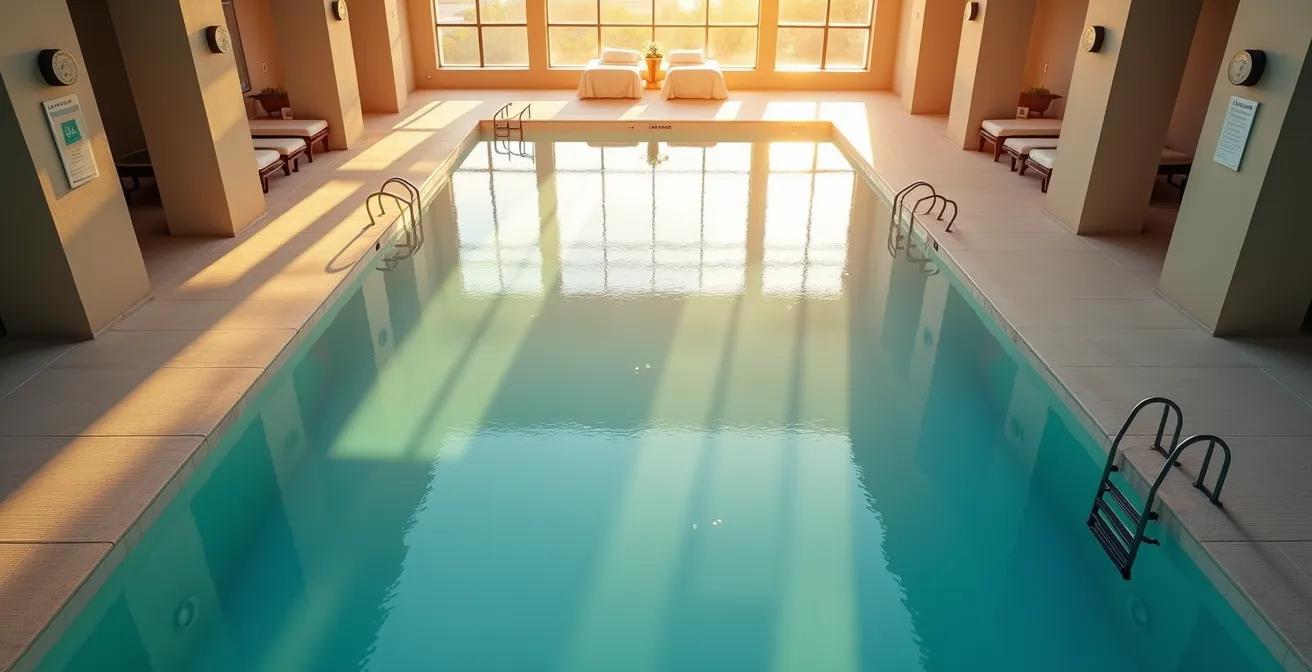
As the image above illustrates, a therapeutic pool is a highly controlled clinical environment. The focus is on creating the optimal conditions for safe movement and tissue repair, where warmth plays a central role in relaxing muscles and promoting healing blood flow.
Swimmer’s Ear: How to Prevent Infection in Public Pools?
A successful rehabilitation plan is built on consistency. Every missed session is a step backward, and nothing derails progress faster than a preventable secondary issue like swimmer’s ear (otitis externa). This common and painful infection of the outer ear canal is caused by water that remains in the ear after swimming, creating a moist environment for bacteria to grow. For someone on a strict recovery timeline, the consequences are significant; rehabilitation specialists warn that a 1-2 week break from pool therapy due to an infection can completely derail momentum, leading to loss of strength and mobility gains.
Preventing swimmer’s ear is a key aspect of secondary injury prevention. While the presence of bacteria is a factor, the chemical environment of the pool plays a huge role. Highly chlorinated pools, while effective at killing pathogens in the water, can be harsh on the delicate skin inside the ear canal, stripping away the protective layer of earwax and making it more susceptible to infection. The type of sanitation system used by a pool can make a substantial difference for those prone to this condition.
Understanding the differences between pool sanitation systems can help you choose a facility that is less likely to cause irritation. This table provides a comparison of the most common systems and their impact on sensitive skin and healing tissues.
| System Type | Skin Impact | Healing Incision Risk | Ear Canal Irritation |
|---|---|---|---|
| Standard Chlorine | Moderate drying | Moderate risk | High |
| Saltwater | Minimal drying | Low risk | Low |
| Bromine | Low irritation | Low risk | Moderate |
| Ozone | Very low irritation | Very low risk | Minimal |
Beyond choosing the right pool, diligent ear care is essential. Always dry your ears thoroughly after swimming, using a towel. Tilt your head to each side to help any trapped water drain. Using preventative, over-the-counter eardrops that contain a mild acid (like acetic acid) can help restore the natural pH of the ear canal and inhibit bacterial growth. Taking these simple steps ensures that your focus remains on healing your primary injury, not fighting a painful and unnecessary infection.
Skin Care for Swimmers: Neutralizing Chlorine Before It Causes Eczema?
Just as chlorine can irritate the ear canal, it can be equally harsh on the skin, especially skin that is already sensitive or covering a healing surgical incision. Chlorine and other pool chemicals bond to the skin and hair, and if not neutralized, can lead to extreme dryness, itching, and even trigger conditions like contact dermatitis or eczema. For a rehabilitation patient, compromised skin integrity is more than an inconvenience; it can be a barrier to therapy, particularly if a surgical site becomes irritated. This makes a post-swim skincare routine another critical pillar of secondary injury prevention.
For patients with recent surgical wounds, protecting the incision is the highest priority. As the HydroWorx Clinical Team notes, specialized coverings are often used to enable an earlier return to the water.
Some clinicians use tegaderm or opsite which completely seals incisions and wounds, allowing patients to get in water sooner and begin recovering sooner.
– HydroWorx Clinical Team, Aquatic Therapy Rehabilitation Guidelines
Beyond protecting specific sites, a consistent protocol to neutralize and moisturize the skin after every session is essential. The goal is to remove the chemical irritants and immediately restore the skin’s protective barrier. Simply rinsing off isn’t enough; a more strategic approach is needed to counteract the chemical effects of the pool environment and prevent long-term skin damage.
By following a dedicated protocol, you can mitigate the harsh effects of pool chemicals and keep your skin healthy, ensuring it never becomes a reason to miss a valuable therapy session.
Your Action Plan: Post-Swim Skin Protection Protocol
- Rinse Immediately: Shower with fresh, clean water within 3 minutes of exiting the pool to remove the bulk of the chlorine from your skin’s surface.
- Neutralize Chlorine: Use a topical Vitamin C spray or a specialized after-swim body wash. Vitamin C effectively neutralizes the chlorine-skin bond, stopping the chemical irritation process.
- Restore the Barrier: While your skin is still damp, apply a generous amount of a fragrance-free, ceramide-based moisturizer. Ceramides are lipids that help form the skin’s barrier and retain moisture.
- Protect Healing Sites: If you have a healing surgical site that is cleared for water exposure, apply any prescribed barrier cream or ointment before you get in the pool to provide an extra layer of protection.
- Daily Monitoring: After your routine, monitor any surgical scars or sensitive areas daily for signs of redness, irritation, or infection, and consult your doctor if any concerns arise.
Pull Buoys and Kickboards: Isolating Muscles for Targeted Recovery?
The true genius of aquatic rehabilitation lies in its adaptability. It’s not just about floating; it’s about using the water’s unique properties to precisely target or unload specific muscle groups. This is where tools like pull buoys and kickboards become invaluable clinical instruments. Their purpose is to manipulate buoyancy, allowing you to isolate parts of your body to focus on specific rehabilitation goals. This approach embodies the principle of using water as an adaptive resistance tool, enabling controlled, targeted strengthening that is simply not possible on land.
The fundamental principle at play is the offloading of body weight. The deeper you are in the water, the less weight your joints have to bear. As biomechanical studies demonstrate that in chest-deep water, joint loading drops by 60-75%. A pull buoy, placed between the thighs, enhances this effect for the lower body by providing enough flotation to let your legs trail passively. This allows you to focus entirely on your core and upper body pull, building strength without putting any stress on injured knees, hips, or ankles.
Conversely, a kickboard isolates the lower body. By supporting your upper body, it forces your legs and core to do all the work, making it an excellent tool for rebuilding leg strength post-surgery or injury. The water’s viscous resistance means the harder you kick, the more resistance you encounter, creating a self-regulating and safe form of progressive exercise.
Case Study: Targeted Exercises in ACL Rehabilitation
In aquatic therapy programs for lower body injuries like ACL tears, specific exercises are used to rebuild stability and strength in a controlled, low-impact environment. Effective movements include marching in place against the water’s resistance, side-stepping to engage hip abductors, and gentle knee flexion and extension. For ACL recovery specifically, isolated leg raises and hip adduction exercises in the water allow for muscle activation without the weight-bearing stress that could compromise the healing graft.
By intelligently incorporating these tools, you and your therapist can design a program that strengthens supporting muscles while allowing the injured area to heal, accelerating a safe return to full function.
Why Dermatologists Recommend Organic Cotton for Eczema Prone Skin?
The care you take for your body doesn’t end when you step out of the shower. After following a meticulous post-swim skincare routine to neutralize chlorine and moisturize, the very next thing that touches your sensitive skin is your clothing. For skin that has been sensitized by pool chemicals, this choice is surprisingly important. While this topic often falls under the umbrella of managing chronic conditions like eczema, the principles are directly applicable to the post-rehabilitation context. Skin irritated by chlorine behaves very much like eczema-prone skin: its protective barrier is compromised, making it highly reactive to friction and synthetic materials.
This is why dermatologists often recommend materials like 100% organic cotton. Unlike synthetic fabrics such as polyester or nylon, cotton is highly breathable. It allows air to circulate freely, which helps keep the skin dry and cool, preventing the buildup of sweat and moisture that can lead to further irritation or bacterial growth. Synthetic fabrics, by contrast, can trap heat and moisture against the skin, creating an ideal environment for inflammation.
Moreover, the “organic” designation is not just a marketing term. Organic cotton is grown without the use of harsh pesticides and chemicals, and it is processed without the aggressive dyes and finishing agents (like formaldehyde) that are common in conventional textile manufacturing. These residual chemicals can be significant irritants for already compromised skin. Choosing a soft, loose-fitting organic cotton garment after your swim is the final step in creating a soothing, low-irritant environment that allows your skin to recover and repair itself, ensuring that skin sensitivity never becomes a barrier to your physical therapy.
Foam Rolling: Does It Break Up Fascia or Just Cause Pain?
Aquatic therapy is a powerful tool, but it’s most effective when integrated into a comprehensive recovery strategy that includes land-based modalities. Foam rolling is one such complementary practice, but it’s widely misunderstood. The goal of foam rolling in a rehabilitation context is not to aggressively “break up” fascia—a painful and often counterproductive approach—but to gently reduce muscle tension, improve blood flow, and increase mobility, particularly in the muscles that are compensating for an injury.
When sequenced correctly with aquatic exercise, foam rolling can enhance your results. The water provides the ideal environment for strengthening, as it unloads the joints while providing resistance. For example, studies on combined therapy approaches show that regular walking in water can increase knee joint strength by up to 30%. Foam rolling acts as the perfect preparatory and recovery tool for these sessions. By rolling *before* you get in the pool, you can release tightness in key muscle groups like the hip flexors or IT band, allowing for a greater and more comfortable range of motion during your water exercises.
The key is to listen to your body and use the roller as a tool for dialogue, not a weapon of war. The pressure should be firm but manageable, never sharp or radiating. A proper foam rolling routine complements the gentle, restorative nature of aquatic therapy.
- Pre-Pool: Focus on rolling the muscles that feel tight or are known to compensate for your injury. For knee pain, this might mean rolling the quadriceps, hamstrings, and glutes of the *uninjured* leg that has been taking on extra work.
- Avoid the Injury Site: Never roll directly over an acute injury, a swollen joint, or a recent surgical site. The goal is to release tension in the surrounding, supportive musculature.
- Post-Pool: A light rolling session after your swim can help release any tension that may have built up during the workout and promote circulation to aid in recovery.
- Use Pain as a Guide: A dull, pressure-like sensation is normal. Sharp, shooting, or radiating pain is a signal to stop immediately.
Key Takeaways
- Aquatic therapy is a clinical practice; success requires mastering water’s properties (resistance, pressure, temperature), not just floating.
- Stroke selection is critical. Backstroke is often ideal for spinal support, while breaststroke can worsen knee and back pain due to its biomechanics.
- Secondary injuries from poor hygiene (swimmer’s ear) or skin irritation can derail a rehabilitation plan. Prevention is non-negotiable.
The Biology of Repair: Why Muscles Grow While You Sleep, Not While You Lift?
The final, and perhaps most crucial, element of any rehabilitation program is understanding the biology of repair. For a former athlete accustomed to the “no pain, no gain” philosophy, it can be a difficult mental shift. Exercise, whether on land or in water, is the *stimulus* for change, not the change itself. The actual healing and strengthening of tissues—the muscle growth, the ligament repair—happens during periods of rest. Your time in the pool creates the blueprint for repair; your time out of the pool is when the construction happens.
Aquatic therapy is uniquely suited to this cycle of stimulus and repair. As one physical therapist from the Kansas Joint and Spine Institute explains, the water’s properties allow for a wide range of therapeutic activities. With a toll of over 200,000 ACL injuries occurring yearly in the US alone, effective rehabilitation that respects the healing process is critical.
Any exercise you can do on land you can do in the pool with the added resistance or assistance of the water.
– PT at Kansas Joint and Spine Institute, Clinical Rehabilitation Guidelines
The brilliance of this is that the water’s viscous resistance allows for sufficient muscle stimulus to trigger adaptation, while its buoyancy protects joints from the microtrauma and inflammation that would necessitate prolonged recovery time. This allows for more consistent therapy sessions. Furthermore, the hydrostatic pressure of the water plays a direct role in the recovery process itself. This gentle, constant pressure on the submerged body part acts like a full-body compression wrap, improving circulation and helping to flush out metabolic waste products and reduce swelling, even after you have left the pool.
This creates the perfect environment for the biology of repair to work its magic. By providing a safe stimulus in the water and then prioritizing sleep, nutrition, and adequate rest on land, you honor the body’s natural healing cycle. You are no longer just fighting against your injury; you are creating the ideal conditions for your body to rebuild itself, stronger and more resilient than before.
Your journey back to pain-free movement is a marathon, not a sprint. The next logical step is to discuss these principles with your physical therapist to co-create a personalized aquatic program that respects your body’s unique needs and timeline.