
The key to conquering anxiety isn’t just exercising, but transforming your workouts into a deliberate practice for mental resilience.
- Physical stress from training teaches your nervous system to better handle psychological stress at work.
- Specific drills, like balancing, directly sharpen the brain circuits responsible for focus and emotional regulation.
Recommendation: Stop exercising for your body alone. Start training with the specific intention of forging the mental skills you need to thrive under pressure.
For the high-stress professional, anxiety isn’t a vague feeling; it’s a drain on focus, a barrier to decision-making, and a constant, low-level hum of pressure. The standard advice is predictable: “go for a run,” “lift some weights.” While well-intentioned, this advice misses the fundamental point. It treats exercise as a mere distraction or a way to “burn off” stress. But what if the true power of athletic discipline wasn’t just in the release, but in the reconstruction? What if the key wasn’t simply to move, but to move with a specific purpose that directly transfers to your mental performance in the boardroom?
The common approach focuses on the what—exercise—but ignores the how and the why. It fails to explain the direct cognitive transfer that occurs when you push through a difficult set or hold a challenging yoga pose. The real breakthrough happens when you understand that physical training is a laboratory for the mind. It’s where you can safely practice managing discomfort, regulating your physiological response to stress, and sharpening your focus under duress. The benefits aren’t accidental; they are trainable skills.
This article moves beyond platitudes. We will dissect the specific mechanisms that link athletic discipline to mental fortitude. We will explore how the neurochemical architecture of your brain can be intentionally rewired through targeted physical effort. Instead of just treating the symptoms of anxiety, you will learn to build, from the ground up, a robust psychological framework capable of withstanding the pressures of a demanding career. This is not about getting fit; it’s about forging an unbreakable mind.
To guide you through this holistic approach, this article is structured to build your understanding layer by layer, from the neurochemical foundations to the practical application in your daily routine. Explore the full blueprint for transforming your physical efforts into mental strength.
Summary: How Athletic Discipline Forges Mental Resilience
- The “Runner’s High” Mechanism: How to Trigger Neurochemical Release?
- How Waking Up at 5 AM for Gym Builds Career Resilience?
- Active Rest: Why Lying on the Couch Is Not the Best Recovery for Stress?
- Micro-Goals vs. Macro-Goals: Which Keeps You Motivated When Progress Stalls?
- Proprioception Drills: How Balancing Exercises Sharpen Your Focus at Work?
- Why Following Every Trend Leads to Creative Burnout and Confusion?
- Deep Sleep vs. REM: Which Stage Repairs Physical Tissue?
- HIIT vs. LISS: Which Cardio Protocol Burns More Fat in Less Time?
The “Runner’s High” Mechanism: How to Trigger Neurochemical Release?
The feeling of euphoria and reduced anxiety after a strenuous run, often called the “runner’s high,” is a powerful demonstration of exercise’s mental benefits. For years, this phenomenon was attributed solely to endorphins, the body’s natural opioids. However, this is an oversimplification. While endorphins play a role, their large molecular structure prevents them from easily crossing the blood-brain barrier. The true architects of this mental shift are more complex and accessible than we thought.
The primary driver is the endocannabinoid system (eCB), the body’s own version of the compounds found in cannabis. During sustained, moderate-intensity exercise, your body ramps up the production of molecules like anandamide. Unlike endorphins, these are small, lipid-soluble molecules that readily cross into the brain, where they bind to cannabinoid receptors to produce feelings of calm, reduce pain, and lessen anxiety. This isn’t just a feeling; it’s a measurable neurochemical event. A groundbreaking study in PNAS demonstrated that a runner’s high depends on cannabinoid receptors, showing that mice engineered without them did not experience the same anxiety-reducing effects from running.
Understanding this mechanism is key. It means you can intentionally trigger this anxiolytic response. The goal is not just to exercise, but to achieve an intensity that stimulates your eCB system. This transforms your workout from a physical chore into a targeted session of neurochemical architecture, where you are actively building a more resilient and less anxious brain.
By aiming for this state, you’re not just running from your stress; you’re fundamentally altering the brain chemistry that produces it in the first place.
How Waking Up at 5 AM for Gym Builds Career Resilience?
Waking up before dawn to exercise is often praised for its productivity benefits, but its true power lies in building psychological armor for the professional world. The act itself is a foundational lesson in discipline. By choosing a difficult, voluntary action as the first order of business, you set a powerful precedent for the rest of the day. This isn’t about finding more hours; it’s about mastering your own resolve before the world has a chance to test it.

From a neuroscientific perspective, the morning is a critical window. As Teseo Academy Research notes, your cortisol (stress hormone) levels are naturally elevated upon waking. Your first actions awaken and prime the neural pathways that will fire for the rest of the day. By channeling that morning cortisol surge into a structured workout, you perform a metabolic reset. You’re teaching your body to associate this arousal state not with anxiety, but with productive, focused effort. You clear out the remaining adenosine, a compound that promotes sleepiness, ensuring you arrive at work mentally sharp and alert.
This pre-work training session becomes a daily act of willpower fortification. Every time you choose the gym over the snooze button, you are performing a rep for your anterior mid-cingulate cortex (AMCC), the part of your brain associated with willpower. You prove to yourself that you can follow through on commitments, a skill that directly translates into career resilience. When faced with a challenging project or a difficult conversation at work, your brain has a recent, tangible memory of overcoming resistance. It knows you are capable of doing hard things because you’ve already done one today.
The 5 AM workout is more than exercise; it’s a strategic decision to win the day before it has even begun, building a foundation of self-mastery that work-related stress cannot easily dismantle.
Active Rest: Why Lying on the Couch Is Not the Best Recovery for Stress?
After a stressful day or an intense workout, the intuitive response is to collapse onto the couch. This is passive recovery—the complete cessation of activity. While it feels logical, it’s often a missed opportunity for genuine mental and physiological restoration. The alternative, active recovery, involves low-intensity movement like a gentle walk, stretching, or a slow bike ride. This approach is far more effective for managing stress because it continues to engage the very systems that help regulate it.
The key, once again, lies in your neurochemical architecture. While intense exercise is a potent trigger for endocannabinoids (eCBs), low-intensity movement can help sustain their presence and facilitate recovery. Research shows that exercise is a reliable way to boost eCBs; one review found that after acute exercise, 14 of 17 studies detected an increase in eCBs. Passive rest does not provide this stimulation. Active recovery, however, keeps the blood flowing, which helps to clear metabolic byproducts like lactate from your muscles, reducing soreness and speeding up physical repair. This physical relief contributes to a greater sense of mental well-being.
As Hilary A. Marusak, a researcher at Wayne State University School of Medicine, explains, the intensity matters for the initial boost: “It appears that moderate levels of exercise intensity… are more effective than lower-intensity exercise… when it comes to raising endocannabinoid levels.” She suggests keeping your heart rate between 70% and 80% of your maximum for at least 30 minutes to get the full benefit. However, on rest days, a less intense active recovery session serves a different purpose: it prevents the stagnation that can lead to both physical stiffness and mental rumination. Lying on the couch allows stress and anxious thoughts to circle, while a gentle walk introduces new sensory input and promotes a state of calm alertness.
Therefore, think of recovery not as a full stop, but as a change in tempo. By choosing a walk in the park over a Netflix binge, you are making an active choice to continue the process of stress regulation, ensuring you are better repaired, both physically and mentally, for the next challenge.
Micro-Goals vs. Macro-Goals: Which Keeps You Motivated When Progress Stalls?
Every professional understands the power of a “macro-goal,” like a promotion or a major project completion. In fitness, this might be running a marathon or lifting a certain weight. These goals provide direction, but they can also be a source of frustration when progress inevitably stalls. The long, uncertain path can kill motivation. This is where the athletic concept of the “micro-goal” becomes a powerful tool for career and mental resilience.
A macro-goal is the destination; a micro-goal is the very next step. It’s not about the marathon; it’s about finishing the next mile. It’s not about the promotion; it’s about successfully completing today’s most important task. This approach breaks down an overwhelming journey into a series of manageable, immediate wins. Each completed micro-goal provides a small dopamine hit, creating a positive feedback loop that sustains motivation when the larger goal feels distant.
Neuroscientist Andrew Huberman takes this a step further with the concept of “micro-sucks,” which he describes as small, voluntary challenges that build discipline. These are tasks that push you slightly beyond your comfort zone. As he explains, “Regularly engaging in these small challenges can strengthen your AMCC, boosting your overall tenacity.” By embracing these moments of deliberate friction—pushing for one more rep, holding a stretch for ten more seconds, or tackling a dreaded email first thing—you are performing willpower fortification. This isn’t just a theory; neuroscience shows how these acts of tenacity can be trained like any other skill.
Your Action Plan for Auditing Workouts for Mental Gains
- Identify Points of Friction: List all the physical and mental challenges in your current training where you feel the urge to quit (e.g., the last minute of a plank, the final hill on a run).
- Map to Professional Skills: For each point of friction, identify the corresponding mental skill it trains (e.g., holding the plank trains sustained focus; climbing the hill trains resilience against fatigue).
- Set Micro-Goals: Instead of “do better,” create a specific, tiny goal for your next session (e.g., “hold the plank for 5 extra seconds,” “maintain form through the first half of the hill”).
- Practice Cognitive Transfer: After your workout, consciously acknowledge the mental skill you just practiced. Verbally tell yourself, “I practiced focus under duress. I will apply that same focus to the 2 PM budget meeting.”
- Track and Escalate: Keep a log of your micro-goal successes. Once a micro-goal becomes easy, slightly increase the difficulty to ensure continuous willpower fortification.
By shifting your focus from the macro to the micro, you transform motivation from a fleeting feeling into a reliable, self-generated resource that carries you through inevitable plateaus, both in the gym and in your career.
Proprioception Drills: How Balancing Exercises Sharpen Your Focus at Work?
In the quest for mental toughness, we often focus on brute strength or endurance. However, a more subtle and profoundly effective tool is proprioception—your brain’s awareness of your body’s position in space. Training this sense through balancing exercises is a direct workout for the parts of your brain responsible for focus, stability, and emotional regulation, skills that are invaluable in a high-stress professional environment.
When you perform an exercise like a single-leg deadlift or stand on an unstable surface, your cerebellum and other brain regions go into overdrive. They must rapidly process a constant stream of feedback from nerves in your muscles and joints to make thousands of micro-adjustments to keep you upright. This process demands intense, single-pointed concentration. Your mind cannot wander. This is proprioceptive sharpening in action, and it is the physical equivalent of a mindfulness meditation session. You are training your brain to filter out distractions and maintain focus on a single, crucial task.
This is the essence of cognitive transfer. The ability to maintain calm, focused stability while your body is physically under duress is not just a gym skill. It directly maps onto the ability to remain calm and focused when you are under psychological duress at work—facing a tight deadline, receiving critical feedback, or navigating a tense negotiation. Your nervous system learns that instability is a problem to be solved with focus, not a reason to panic. The link is not just anecdotal; empirical evidence demonstrates that athletes with higher mental toughness show lower levels of anxiety and better self-inhibition skills, which are honed by this type of training.
By incorporating simple balance drills into your routine, you are not just improving your stability; you are forging a more focused, centered, and less reactive mind, one that is better equipped to find its balance in the chaotic world of professional life.
Why Following Every Trend Leads to Creative Burnout and Confusion?
The fitness world, much like the business world, is saturated with trends. One month it’s a new “bio-hacking” protocol, the next it’s a viral workout challenge. Chasing every new, shiny object is a recipe for confusion and burnout. It prevents you from achieving the one thing that truly builds resilience: mastery through consistency. When you are constantly switching routines, you never stay with one long enough to move past the novice stage and reap its deeper neurological and psychological benefits.
Building mental toughness through exercise is not about novelty; it’s about deliberate practice. It’s about choosing a core set of movements or a specific discipline and committing to it. As psychotherapist and fitness instructor Eloise Skinner notes, shorter, daily routines are often more effective because they are easier to commit to, which is “great for forming habits and building resilience over time.” This steady, repeated effort is what forges new neural pathways and strengthens your resolve. It’s the slow, progressive overload—adding a little more weight, one more rep, a few more seconds—that teaches your mind and body to adapt and grow stronger.
Think of it as building a “keystone habit.” By committing to a consistent, non-negotiable training schedule, the positive effects ripple out into all other areas of your life. You’re not just building physical strength; you’re building a bedrock of discipline. This foundation provides a sense of stability and control that is essential for managing anxiety. When your external world feels chaotic, this internal locus of control—the knowledge that you can and will follow through on your training—becomes an invaluable psychological anchor. It proves you are capable of upholding positive behavioral choices, a belief that counters the feelings of helplessness that often accompany anxiety.
Instead of seeking the “perfect” workout, choose a “good enough” one and commit to it. The magic is not in the method; it is in the relentless, unwavering application of it.
Deep Sleep vs. REM: Which Stage Repairs Physical Tissue?
You can have the most sophisticated training plan and the strongest willpower, but without adequate sleep, your efforts to build mental toughness will crumble. Sleep is not a passive state of inactivity; it is an active, critical process of mental and physical repair. All the stress you apply to your body in the gym and your mind at work is broken down and rebuilt during sleep. Understanding its stages is key to optimizing this foundational pillar of resilience.
Your sleep cycle is broadly divided into two main types: REM (Rapid Eye Movement) and non-REM sleep. Non-REM is further broken down into several stages, the most crucial for physical recovery being Stage 3, or “deep sleep.” During this period, your body releases the majority of its human growth hormone (HGH), which is essential for repairing muscles, strengthening bones, and rebuilding tissues that were stressed during the day. This is the stage where the physical adaptations from your workout are consolidated. Skimping on deep sleep means you are literally throwing away the gains from your training and starting the next day in a physically depleted state.
REM sleep, on the other hand, is primarily for mental and emotional processing. This is when your brain consolidates memories, processes emotions from the day, and engages in problem-solving. It’s often called “mental-emotional first aid.” A lack of REM sleep can lead to emotional volatility, poor memory, and an inability to cope with stress—directly undermining your efforts to build mental resilience. As Andrew Huberman states, willpower and tenacity are inextricably linked to sleep. A single night of poor sleep can significantly impair the function of your prefrontal cortex, the area responsible for executive functions like decision-making and impulse control.
Therefore, prioritizing 7-9 hours of quality sleep is not a luxury; it is the most important training session of your day. It is the non-negotiable foundation upon which all physical and mental resilience is built.
Key Takeaways
- Mental resilience is a trainable skill, not a passive byproduct of exercise; specific drills transfer directly to professional challenges.
- You can intentionally manage anxiety by triggering your body’s endocannabinoid system through moderate-intensity, sustained exercise.
- Willpower is like a muscle, strengthened through small, consistent acts of discipline (“micro-goals”) that fortify the brain’s tenacity circuits.
HIIT vs. LISS: Which Cardio Protocol Burns More Fat in Less Time?
The debate between High-Intensity Interval Training (HIIT) and Low-Intensity Steady-State (LISS) cardio is often framed around fat loss and time efficiency. While HIIT is generally more effective for burning calories in a shorter period, a sports psychology perspective reframes the question: which protocol is better for training the specific mental skills you need to combat anxiety?
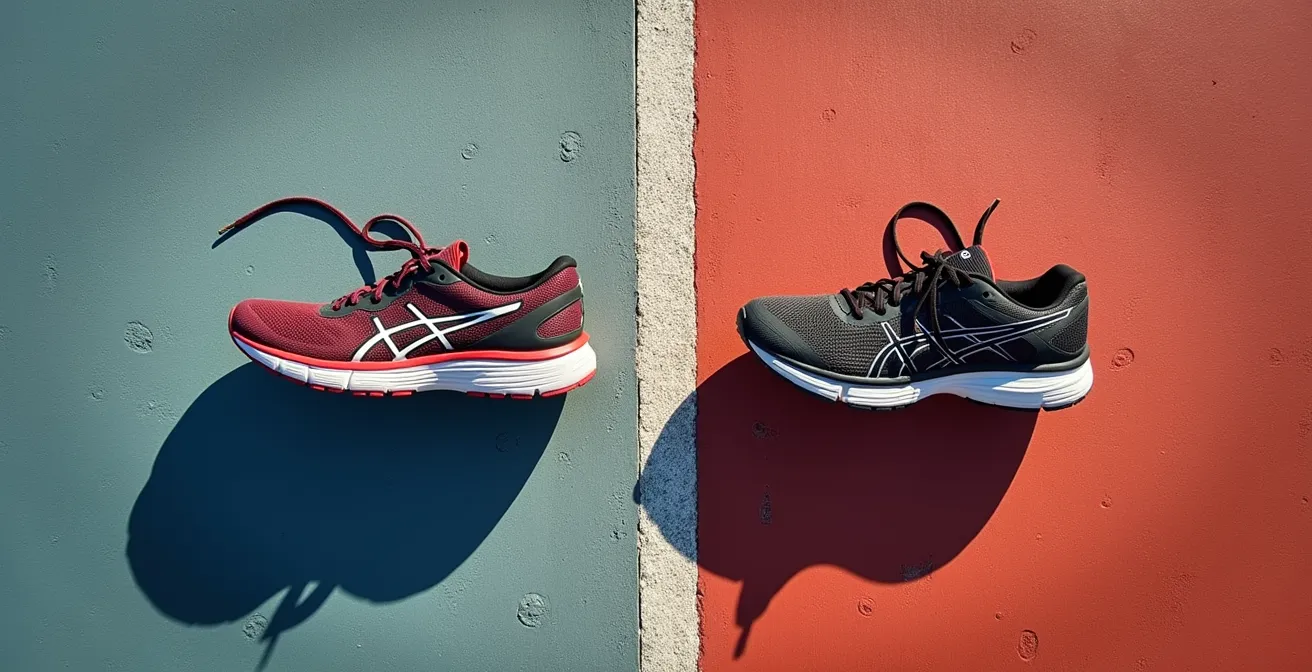
HIIT involves short, all-out bursts of effort followed by brief recovery periods. This protocol is a powerful training ground for stress inoculation. The intense intervals spike your heart rate and flood your system with stress hormones like adrenaline and cortisol, mimicking the body’s acute “fight or flight” response. By repeatedly and voluntarily entering this state in a controlled environment, you teach your nervous system how to recover from it quickly and efficiently. This improves your ability to stay calm and think clearly when faced with a sudden, high-pressure situation at work, like an unexpected deadline or a critical presentation.
LISS, on the other hand, involves maintaining a moderate, steady heart rate for a longer duration (e.g., a 45-minute jog or bike ride). This protocol is an excellent tool for training sustained focus and mental endurance. It teaches you to settle into a rhythm, manage low-level discomfort over an extended period, and resist the mental fatigue that leads to distraction. LISS is a form of moving meditation, perfect for processing thoughts and fostering a state of calm alertness. It’s the ideal training for days when you need to grind through long, focus-intensive tasks without becoming overwhelmed or agitated.
The best approach is to use both. Use HIIT to practice handling acute panic and LISS to build your capacity for enduring focus. Stop choosing your cardio based on calories alone and start choosing it based on the mental armor you want to build that day. Begin today to apply these principles, transforming every workout into a deliberate act of mental fortification.