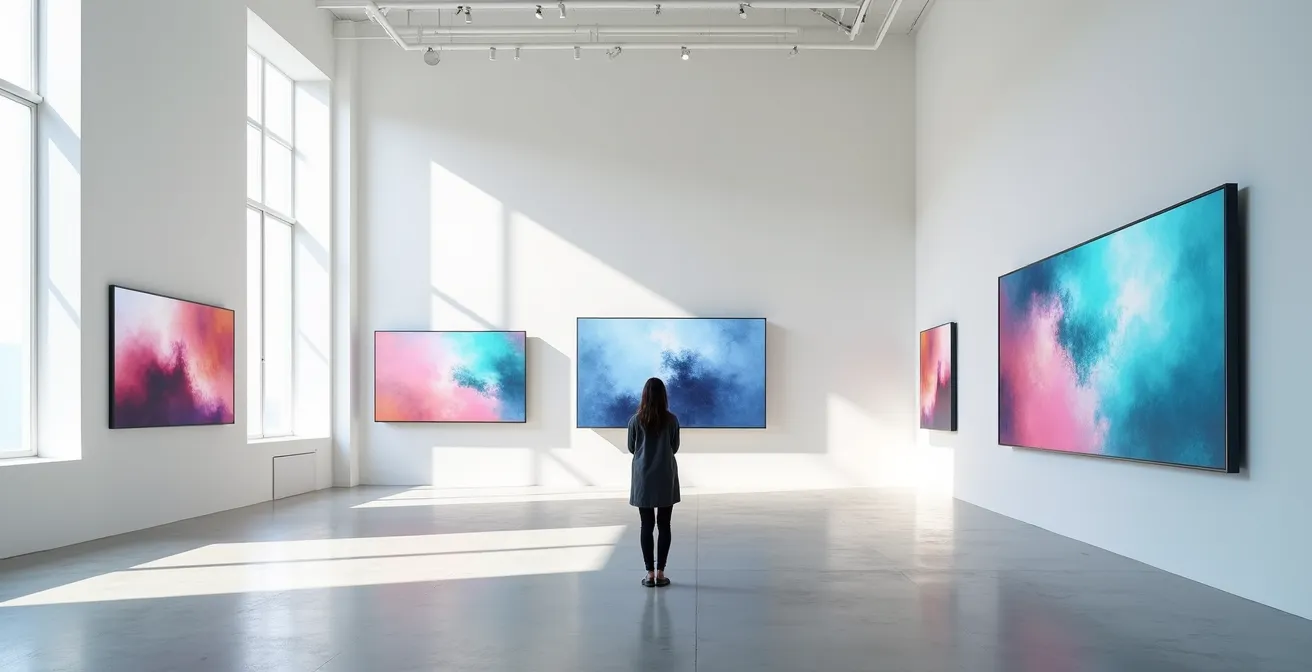
Contrary to the market hype, the true value of digital art isn’t found on the blockchain, but in the same artistic principles that govern a masterpiece on canvas.
- Quality is judged by technical execution (pixel-perfect composition) and conceptual depth, not just social media popularity.
- The medium’s unique properties—like animation or generative code—are key to its artistic merit, something a physical painting cannot replicate.
Recommendation: Evaluate a digital work not as a financial asset, but as you would any piece of art: by assessing its craftsmanship, its emotional impact, and the story it tells.
If you come from a world that reveres the texture of oil on canvas and the heft of a bronze sculpture, the idea of a JPEG file selling for millions can be perplexing, if not outright absurd. The conversation is often dominated by talk of cryptocurrency bubbles, market speculation, and technical jargon that feels a world away from the quiet contemplation of a gallery. We are told to look at an artist’s follower count or their sales history, reducing artistic merit to a measure of popularity.
But what if this is the wrong conversation? What if the key to understanding digital art has less to do with blockchains and everything to do with the foundational principles of art itself? The truth is, the tools and criteria used for centuries to evaluate physical art are not obsolete in the digital age; they are simply being adapted. The skepticism many feel is valid, but it often stems from looking for value in the wrong place—in the code rather than the concept, in the transaction rather than the transmission of an idea.
This guide is designed to act as a bridge between the traditional and the digital. As a curator, my goal is not to convince you of the market’s whims, but to provide a durable framework for evaluation. We will move beyond the hype to explore how to judge uniqueness in a world of infinite copies, how to spot technical mastery in a sea of pixels, and how to find genuine emotional resonance in a work that lives behind a screen. We will equip you with the language and perspective to see digital art not as a fleeting trend, but as a legitimate and evolving creative frontier.
To navigate this new terrain, we will explore the critical questions that arise when art sheds its physical form. This structured approach will help you build a confident, critical eye for the art of our time.
Summary: A Curator’s Guide to Evaluating Digital Art
- Why Is a JPEG Consider “Unique” in the Art World?
- Pixels and Resolution: Spotting Amateur Mistakes in Digital Composition
- Digital Frames or Projectors: How to Display NFT Art in a Physical Home?
- The Format Obsolescence Risk: Will Your Art Be Viewable in 10 Years?
- Can Digital Art Evoke the Same Emotion as Oil on Canvas?
- Passive Income for Artists: Selling Digital Assets While You Sleep
- Primary vs. Secondary Market: Where Should Beginners Shop?
- VR Exhibitions vs. Traditional Museums: Can Technology Replace Physical Art?
Why Is a JPEG Consider “Unique” in the Art World?
The most common objection to digital art is the “right-click and save” argument: if anyone can create a perfect copy, where is the value? This misunderstands the concept of ownership in the art world. Think of it this way: you can buy a postcard of the Mona Lisa, but you don’t own the painting. The Non-Fungible Token (NFT) that accompanies much of today’s digital art acts as the official, unforgeable title deed. It doesn’t prevent copies, just as a museum doesn’t prevent gift shop prints; it simply proves who holds the original title as designated by the artist.
This separation of image and ownership is not a new phenomenon. Andy Warhol, a master of questioning value, built his career on the mass production of images. His work challenged the very notion that art must be a singular, unique object to be valuable. As one gallery notes, he prepared us for this moment: in a way, he exposed the machinery behind the art market and made us question whether value lies in uniqueness or popularity.
The 2021 Christie’s Warhol NFT Controversy
This debate came to a head when Christie’s auctioned five digital works Andy Warhol created on an Amiga computer in the 1980s as NFTs. The auction house’s CEO stated the sale offered collectors “the possibility to secure the uniqueness and authenticity of this work on the blockchain.” However, critics countered this, arguing that what was being sold was not the original artwork itself, but “this kind of proxy or stand-in.” This high-profile event perfectly encapsulates the central tension: the art world is still collectively defining what it means to “own” a work that has no physical form.
Ultimately, the JPEG file itself isn’t what’s unique. What is unique is the verifiable link between the collector and the artist, recorded on a public ledger. This act of “collecting” is a public declaration of support and appreciation for the artist’s work, a modern form of patronage. The value is not in possessing every copy, but in holding the one true title.
Pixels and Resolution: Spotting Amateur Mistakes in Digital Composition
Once we move past the question of ownership, we can begin to evaluate digital art on its own terms, starting with its technical construction. Just as a trained eye can spot sloppy brushwork on a canvas, it can also identify a lack of craftsmanship in a digital image. The most basic element is resolution. An amateur work might look fine as a small thumbnail on a phone, but when viewed on a proper monitor or digital frame, it becomes pixelated, blurry, or reveals ugly compression artifacts. A professional artist creates work at a very high resolution, ensuring its integrity and clarity regardless of the display size.
Beyond simple clarity, a masterful digital artist demonstrates an intentionality in their composition. This is the concept of “digital patina”—the subtle evidence of the artist’s hand. It might be the deliberate use of digital textures that mimic film grain, the custom-coded “brushstrokes” in a generative piece, or even the sophisticated layering of elements that creates a sense of depth and history within the image. Just as a painter’s visible brushstrokes can be a sign of confident mastery, so too can an artist’s intentional use of digital textures become part of their unique signature.
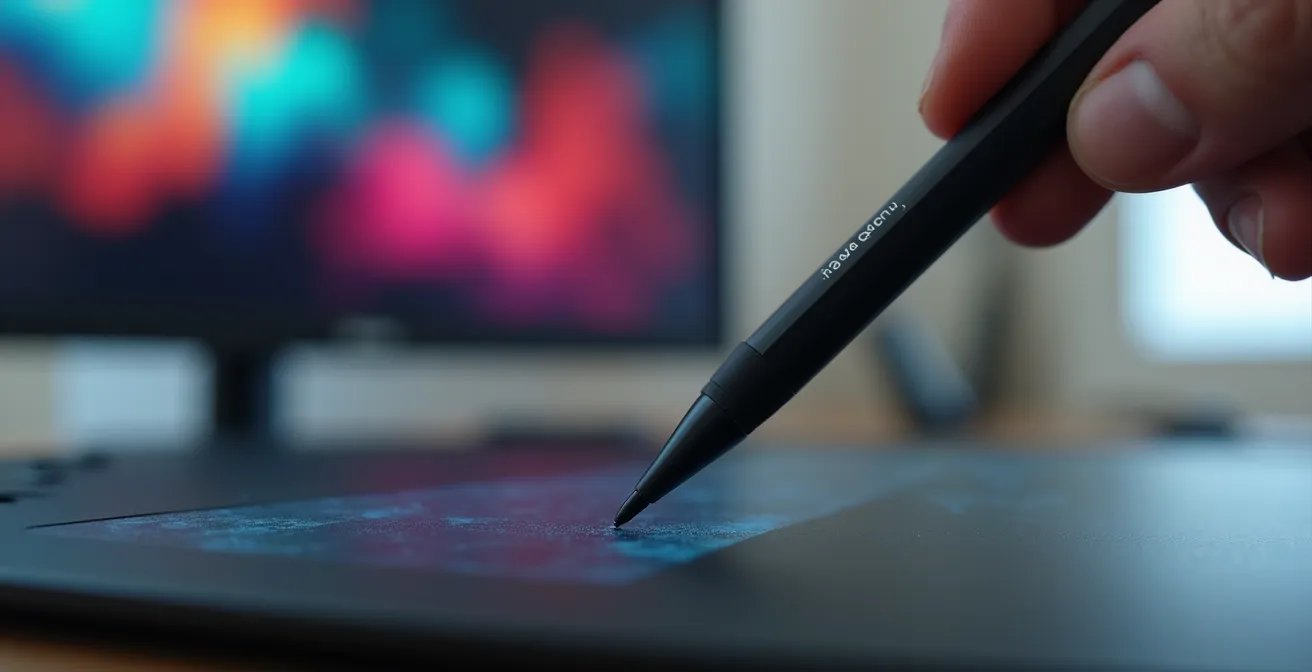
This level of detail work separates the master from the novice. It shows an artist who is not just using software, but is in complete control of their digital tools. The aesthetic impact of these technical choices, such as color saturation and composition, is not merely subjective; it’s a field of study that helps us understand how we perceive and value art.
Your Checklist for Evaluating Technical Quality
- Image Integrity: View the artwork on a large, high-quality screen. Zoom in. Does it remain sharp, or does it become pixelated and blurry?
- Color and Light: Are the colors harmonious and intentional? Is the use of light and shadow sophisticated, creating depth and mood, or does it feel flat and computer-generated?
- Compositional Complexity: Look at the layers. Does the work feel complex and thoughtfully constructed, or is it a simple, one-dimensional image?
- Medium-Awareness: Does the artwork leverage the digital medium in a unique way (e.g., animation, interactivity, generative code), or is it just a static image that could have been a print?
- Artist’s “Hand”: Can you identify a unique style or a “digital patina”—a signature touch that shows mastery over the software and a distinct artistic voice?
Digital Frames or Projectors: How to Display NFT Art in a Physical Home?
A digital file living in a crypto wallet feels abstract and disconnected from the traditional experience of living with art. For digital art to be truly appreciated, it must be brought out of the virtual world and into our physical spaces. The act of curated display is what transforms a file into an art object. This is a crucial step for the traditional collector, as it gives the artwork presence, context, and a place in the home.
The options for display are evolving rapidly. High-resolution digital art frames are becoming increasingly popular, offering museum-quality screens that can accurately reproduce color and detail. Some are connected to specific NFT platforms, allowing collectors to rotate their collection with ease. For larger, more impactful statements, projectors can turn an entire wall into a dynamic canvas, creating an immersive experience that a static painting never could. The key is intentionality: choosing a specific piece for a specific wall, just as you would with a physical painting.
Infinite Objects’ Philosophy: The “Video Print”
The company Infinite Objects offers a fascinating solution that bridges the gap between digital and physical. They create “video prints”—dedicated screens that display a single, perpetually looping animated artwork. These devices have no interface; you cannot pause, rewind, or change the art. To turn it off, you must drain the battery or put it back in its box. This deliberate limitation is genius. As the company’s COO, Roxy Fata, explained, each frame is “less like a tablet or television and more like a statue or figurine.” By removing user control, Infinite Objects imbues the digital work with the singular, unchanging presence of a physical art object, demanding it be appreciated on its own terms.
This move toward dedicated, unchangeable displays is a powerful rebuttal to the idea that digital art is disposable or impermanent. When displayed with care and intention, a digital work can command a room and become a focal point of a collection, holding its own alongside traditional media.
The Format Obsolescence Risk: Will Your Art Be Viewable in 10 Years?
A valid concern for any collector of digital media is longevity. A 15th-century oil painting is still viewable today, but will a 2021 MP4 file be accessible in 2051? The history of technology is a graveyard of obsolete formats, from floppy disks to Flash animations. This risk of format obsolescence is real, but it is a problem the digital art and archival communities are actively working to solve through a concept known as “archival intent.”
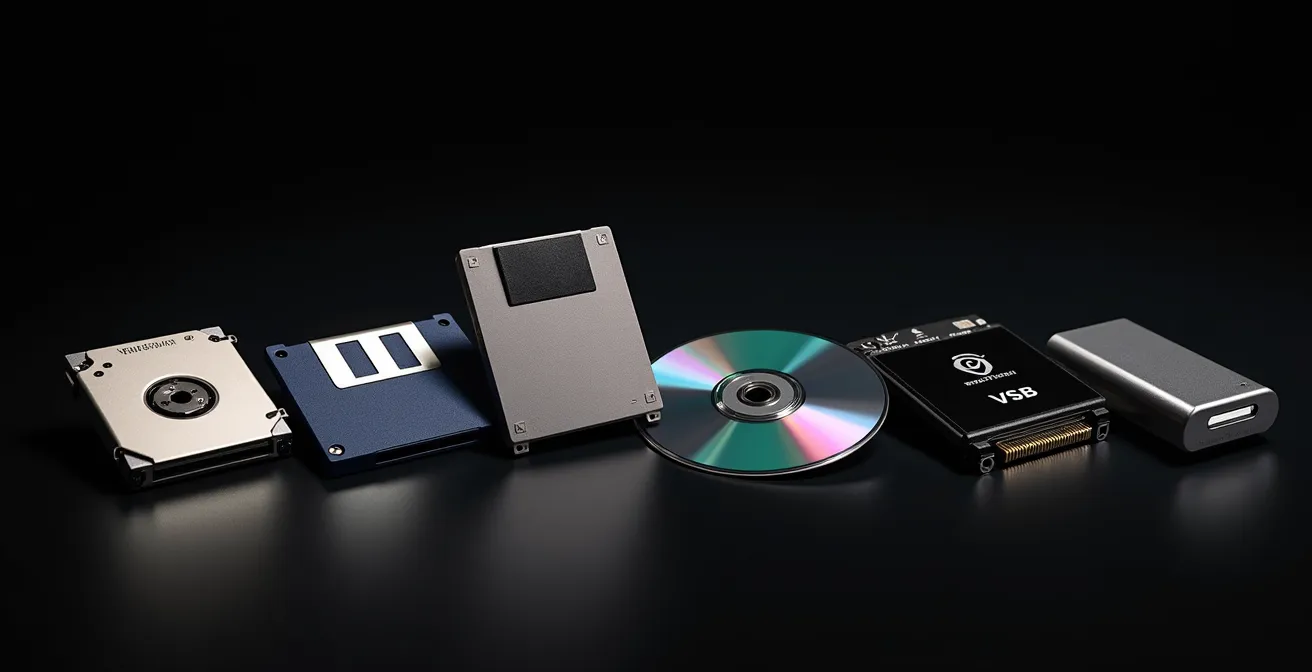
The solution lies in moving away from centralized, corporate-owned servers (like Google Drive or Dropbox) which can change their policies or go out of business. Instead, the art world is turning to decentralized storage systems. Projects like the InterPlanetary File System (IPFS) aim to store data across a global network of computers, ensuring redundancy and preventing a single point of failure. This creates a “permaweb”—a permanent, decentralized internet designed to preserve data forever.
As scholar Jon Ippolito notes, for its advocates, this new ecosystem is an archivist’s dream. He explains that “projects designed to work with blockchains such as Filecoin and Arweave propose a dedicated cryptocurrency as a financial incentive to support the cost of governing and sustaining this ‘permaweb.'” This creates a self-sustaining system where a network of users is paid to ensure the data—the artwork—persists indefinitely.
When evaluating a digital work, a savvy collector should inquire about the artist’s and the platform’s archival strategy. Is the work stored on a centralized server, or is it pinned to a decentralized service like IPFS? An artist who demonstrates clear archival intent is not just selling a file; they are taking responsibility for the long-term legacy of their work, a hallmark of professional artistic practice.
Can Digital Art Evoke the Same Emotion as Oil on Canvas?
This is perhaps the most profound and personal question for a traditional art lover. Can a collection of pixels, however masterfully arranged, truly stir the soul in the same way as the textured, physical presence of a painting? The answer, according to both art theory and neuroscience, is a resounding yes. The emotional power of art lies not in its material, but in its ability to trigger what are known as “aesthetic emotions.”
Art theorists like Leder et al. describe these as feelings of awe, wonder, fascination, or being moved, which are distinct from everyday emotions. These responses are triggered by an “aesthetic judgment” based on an artwork’s perceived beauty, quality, or conceptual power. Crucially, this judgment is not dependent on the medium. A breathtaking digital landscape, a generative animation that evolves in mesmerizing patterns, or an interactive piece that responds to your presence can all provoke a powerful aesthetic experience.
In fact, scientific research suggests our brains are wired to make these judgments almost instantaneously, regardless of the medium. A fascinating study on the aesthetic evaluation of art found that the differences in how experts and laypersons judge an artwork were already measurable within the first moments of viewing. This implies that the core of our emotional and aesthetic response to an image is incredibly rapid and fundamental. A study in *Frontiers in Psychology* even found that differences in evaluation… were already apparent in the 100 ms observation condition.
The key is emotional veracity. Does the work feel authentic? Does it convey a clear mood or idea? Does it make you pause and think, or feel? If a digital artwork can do this, it has succeeded in the most important function of art. The screen is merely the vessel; the emotional journey it facilitates is just as real as one sparked by oil on canvas.
Passive Income for Artists: Selling Digital Assets While You Sleep
For centuries, the financial model for artists was straightforward: create a unique object, sell it once. The advent of printmaking, pioneered by artists like Albrecht Dürer and later mastered by figures like Andy Warhol, introduced the concept of editions, allowing an artist to sell multiples of a single work. The digital art market has supercharged this model, creating new revenue streams that empower artists in unprecedented ways.
Digital assets allow artists to create editions on a massive scale. While Warhol’s largest print editions of Marilyn Monroe numbered around 200 images, it’s common for an NFT artist to release a “mint” of 10,000 unique, algorithmically generated pieces. This allows thousands of fans to own an original work from an artist they admire at an accessible price point. More importantly, many NFT platforms allow artists to program a royalty into their work, so they receive a percentage (typically 5-10%) of every future resale on the secondary market. This creates a source of passive income that simply did not exist for artists in the traditional world, where a painter sees no profit if their work is resold at auction for a hundred times its original price.
This new economic model is being embraced by the highest levels of the art world. In a landmark sale, Christie’s auctioned a collection of Andy Warhol’s recovered digital works as NFTs, which ultimately fetched over $3.3 million. The auction house stated that this act brought a “new form of life” to his work while guaranteeing its authenticity. This demonstrates a powerful fusion of a legendary artist’s legacy with a cutting-edge economic model, showing that the art market is adapting to provide artists with sustainable careers.
For the collector, this is significant. Buying digital art, especially on the primary market, is a more direct and sustained form of patronage. You are not only acquiring a work but are often contributing to the artist’s long-term financial stability, enabling them to continue creating.
Primary vs. Secondary Market: Where Should Beginners Shop?
The digital art world, much like the traditional one, is divided into two main marketplaces: the primary and the secondary. For a traditional art lover entering this space, understanding the distinction is crucial for navigating it with confidence and purpose. The primary market is where you buy artwork directly from the artist or their gallery, typically during an initial release or “mint.” The secondary market is where collectors buy and sell from one another on platforms like OpenSea, much like a traditional auction house.
The secondary market is where you hear stories of astronomical prices and frenzied speculation. With the NFT market having been valued at a staggering $41 billion during its 2021 peak, it’s clear there is significant financial activity. However, for a beginner whose goal is to appreciate and collect art, the secondary market can be a volatile and intimidating place, driven by hype and market trends as much as by artistic merit. It is the domain of traders and highly experienced collectors.
For this reason, the primary market is the ideal starting point for a new collector. Buying directly from an artist has several profound advantages. First, the price is set by the creator, not by market speculation. Second, and more importantly, it offers a direct connection to the artist’s vision. You are participating in the genesis of the work, often with access to the artist’s community on platforms like Discord or X (formerly Twitter), where they discuss their process and ideas. This provides invaluable context that is often lost on the secondary market.
Shopping on the primary market shifts the focus from “Is this a good investment?” to “Do I believe in this artist’s work?” It is an act of patronage and discovery. You are building a collection based on your own taste and your connection to the art, which is the most rewarding path for any true collector, digital or otherwise.
Key Takeaways
- Digital art’s value is rooted in verifiable ownership (NFTs) and the artist’s intent, not just the easily copied file.
- Quality can be judged using traditional criteria: technical skill (resolution, composition), conceptual depth, and emotional impact.
- The digital medium offers unique possibilities like animation and interactivity that are impossible in physical art, creating new avenues for artistic expression.
VR Exhibitions vs. Traditional Museums: Can Technology Replace Physical Art?
The rise of digital art has led to a fear that technology aims to replace the hallowed halls of traditional museums. The reality, however, is far more collaborative and exciting. The world’s most prestigious institutions are not fighting technology; they are embracing it as a powerful tool to enhance, extend, and deepen the visitor’s relationship with art, both physical and digital.
Virtual Reality (VR) exhibitions are a prime example. They are not replacing museums but are becoming a new, dynamic wing of them. The Louvre’s “Mona Lisa: Beyond the Glass” experience is a landmark case. As noted by industry experts, this VR journey allows users to discover intimate details about the painting, such as the texture of its wood panel, that are impossible to see behind the crowds and bulletproof glass. It doesn’t replace the thrill of seeing the real thing; it enriches it by providing unprecedented access and context.
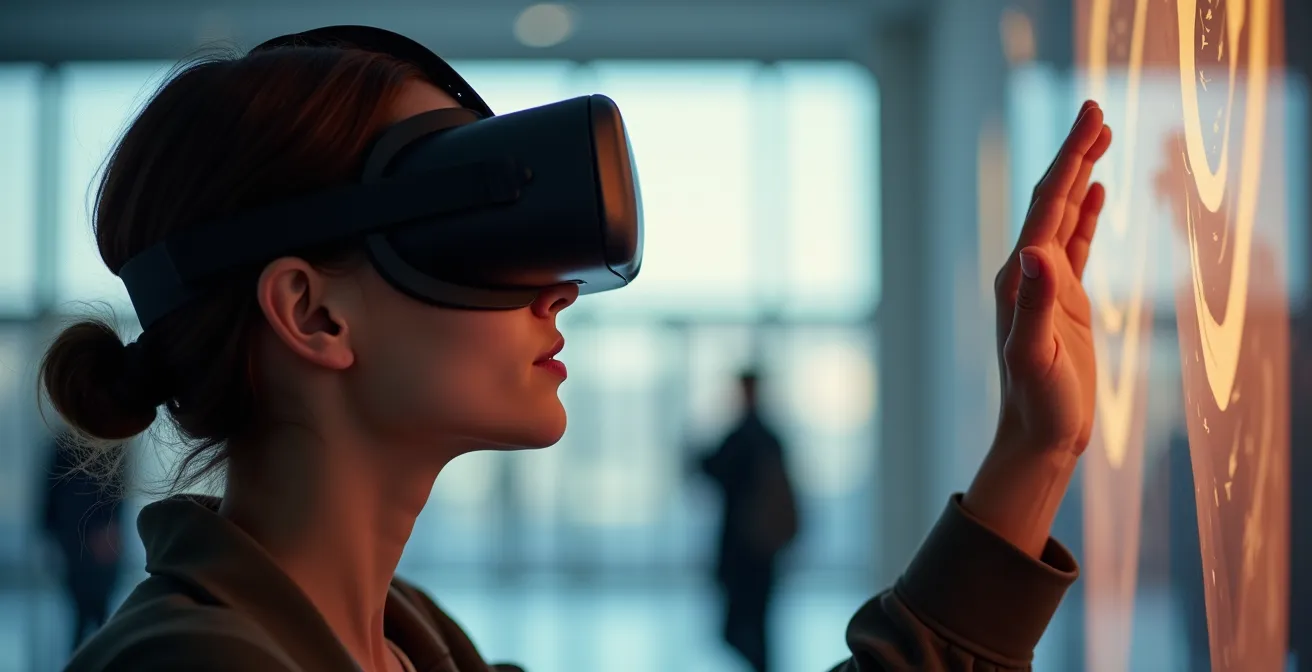
Similarly, the Smithsonian American Art Museum’s “Beyond the Walls” VR experience allows visitors to explore its collection in a new way. Viewers can get closer to paintings than would ever be permitted in real life, examining the rich texture of the canvas and the intricate details of the frame. It transforms the passive act of viewing into an active exploration. Technology here is not a replacement for physical art; it is a bridge to a more profound understanding of it.
Ultimately, these technologies offer a new mode of access. They can bring the museum experience to those who cannot travel, create new forms of interactive storytelling, and provide a native habitat for art that is born digital. The future of art is not a battle between the physical and the virtual, but a synthesis of the two, where each enhances the other.
The next time you encounter a piece of digital art, challenge yourself to look past the price tag and apply these timeless principles. Assess its craftsmanship, consider its conceptual weight, and open yourself to its emotional potential. Begin your journey into this new frontier of creativity today, not as a speculator, but as a curious and informed connoisseur.