
In summary:
- Prioritize heavyweight fabrics (over 250 GSM) as they provide structure and look more luxurious.
- Create “structural contrast” by pairing soft loungewear with rigid items like loafers or a structured blazer.
- Use the “sandwich method” to balance oversized silhouettes by matching your top and shoes.
- Ensure your grooming (hair, makeup) is polished to signal that your comfortable outfit is an intentional choice.
- Small tailoring tweaks, like replacing a drawstring or adding a faux-fly stitch, can dramatically elevate joggers.
The line between the home office and the outside world has blurred, and our wardrobes have followed suit. For many freelancers and hybrid workers, the daily challenge is no longer about choosing a suit, but about making comfortable loungewear look presentable for a video call or a last-minute coffee meeting. The common advice often circles around tossing on a blazer or swapping to “nice shoes,” but these quick fixes can sometimes feel disjointed or fail to address the core issue: the outfit still looks like you just rolled out of bed.
The conversation often misses the underlying principles that make an outfit work. It’s not just about the individual pieces, but how they interact. The secret to successfully transitioning loungewear isn’t about hiding your comfort, but about framing it with intention. But what if the key wasn’t simply adding more “professional” items, but creating a deliberate dialogue between soft and structured elements? This guide moves beyond the generic tips to explore the art of intentional styling. We’ll focus on the principles of structural contrast, fabric architecture, and silhouette balancing to build looks that are both deeply comfortable and undeniably chic.
For those who prefer a visual summary, the following video offers some excellent tips on how to make your favorite comfortable pieces look effortlessly chic, complementing the principles we discuss in detail below.
This article will guide you through the specific strategies that transform your loungewear from a private indulgence to a public statement. From understanding the power of fabric weight to mastering the art of the tuck, you’ll learn how to assemble an outfit that is purposefully polished, never sloppy. The following sections break down these concepts into actionable advice.
Summary: A Guide to Elevating Your Everyday Loungewear
- Why Heavyweight Jersey Looks More Expensive Than Thin Cotton?
- How to Use the “Sandwich Method” to Balance Oversized Silhouettes?
- Loafers vs. Sneakers: Which Shoe Elevates Sweatpants for a Coffee Meeting?
- The “Messy Hair” Trap That Makes Loungewear Look Sloppy
- Replacing Drawstrings: 3 DIY Tweaks to Make Joggers Look Tailored
- How to Layer Crop Tops Over Shirts for a modest Office Look?
- Tucked or Untucked: Styling Shirts to Hide the Elastic Waistband
- Heavyweight vs. Lightweight Hoodies: Selecting the Right GSM for Seasonal Layering
Why Heavyweight Jersey Looks More Expensive Than Thin Cotton?
The foundation of any elevated loungewear look is the fabric itself. A thin, flimsy cotton jersey will always read as “pajamas,” no matter how you style it. The key to a more luxurious and structured appearance lies in the fabric’s weight, often measured in Grams per Square Meter (GSM). Heavier fabrics possess a superior drape and structure, which prevents them from clinging unflatteringly and helps them hold their shape. This inherent structure is what creates a cleaner, more intentional silhouette.
Think of it as fabric architecture. A lightweight fabric has no frame and collapses, while a heavyweight fabric has its own internal structure. According to fabric industry standards, loungewear fabrics above 250 GSM offer not only better durability but also a premium feel that visually translates to higher quality. This substantial feel ensures the garment hangs properly on the body, creating elegant lines rather than bunching or wrinkling in a way that suggests carelessness.
When you’re shopping, pay attention to these details. A high-GSM jogger or hoodie will feel more substantial in your hands, will be completely opaque when held up to the light, and will bounce back into shape after being stretched. This quality is the non-negotiable first step; without a solid foundation, all other styling efforts will fall short. Investing in well-constructed basics made from heavyweight materials is the most critical move in building a versatile loungewear wardrobe.
How to Use the “Sandwich Method” to Balance Oversized Silhouettes?
An oversized hoodie or sweatshirt is the pinnacle of comfort, but it can easily overwhelm your frame and look sloppy. The “sandwich method” is a simple yet powerful styling principle that brings balance and intention to these larger silhouettes. The concept is straightforward: you frame a central piece of your outfit by matching the color or tone of your top and bottom layers, creating a visual “sandwich.” For example, pairing a black oversized hoodie with black loafers creates a cohesive frame around your joggers, which act as the “filling.”
This technique works because it creates a sense of visual harmony and purpose. It tells the viewer that your choice of an oversized item was deliberate. You can play with this concept in various ways. For instance, a white t-shirt layered under a beige hoodie, paired with white sneakers, “sandwiches” your dark-colored pants. This creates a polished, bookended look that feels complete.
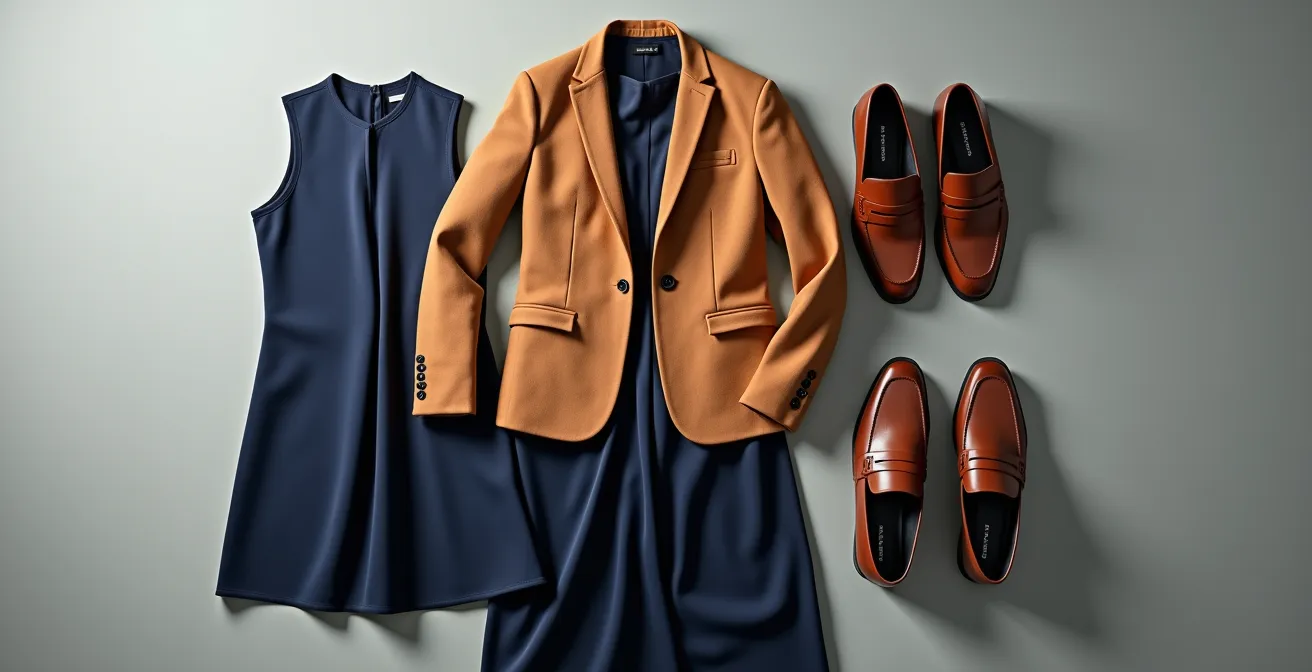
As demonstrated in the visual above, the key is creating a clear connection between the top and bottom of your outfit. This method is particularly effective for freelancers who need to look put-together for video calls. By matching a crewneck sweatshirt to your shoes, you create a cohesive look from head to toe, even if you’re wearing comfortable joggers just out of the camera’s view. The “sandwich method” provides structure where there is none, transforming a potentially shapeless outfit into a considered style statement.
Loafers vs. Sneakers: Which Shoe Elevates Sweatpants for a Coffee Meeting?
Footwear is the anchor of any outfit, and when it comes to loungewear, your choice of shoe is what communicates your intention most clearly. While a clean, minimalist sneaker can work, it often straddles the line between “casual-cool” and “just left the gym.” For a coffee meeting or a casual office day, the loafer is the undisputed champion of elevating sweatpants. It introduces an element of structural contrast that instantly signals polish.
A loafer’s rigid structure, leather finish, and classic silhouette create a powerful juxtaposition against the soft, relaxed nature of a jogger. This “high-low” mix feels deliberate and fashion-forward. As Archie Hewlett, founder of Duke & Dexter, noted in an interview with Esquire UK:
High-low styling has become more of a thing, as trend makers started to wear loafers in more casual ways – with vests and suit trousers, tees and jeans, all the way through to sweatpants and hoodies
– Archie Hewlett, Duke & Dexter founder, quoted in Esquire UK
The choice between loafers and sneakers can be broken down into a few key considerations, as detailed in the following comparative analysis of loungewear footwear.
| Aspect | Loafers | Sneakers |
|---|---|---|
| Formality Signal | Intentional style choice, removes ambiguity | Can read as ‘coming from gym’ |
| Ankle Visibility | Natural ankle flash with no-show socks | Requires deliberate styling |
| Structural Contrast | Rigid structure contrasts soft sweatpants | Soft structure offers less contrast |
| Best For | Coffee meetings, casual office | Weekend errands, relaxed social |
Ultimately, a loafer works because it’s unexpected. It shows you’ve thought about your look beyond pure comfort. It’s the single most effective item for transforming joggers from home-only wear to a viable, stylish option for social and semi-professional settings.
The “Messy Hair” Trap That Makes Loungewear Look Sloppy
One of the most common mistakes when styling loungewear for the outside world is neglecting what’s happening from the neck up. A perfectly curated outfit of heavyweight joggers and structured loafers can be instantly undermined by hair that looks unintentionally messy. The goal is not to have perfectly coiffed, boardroom-ready hair, but to achieve a look of “deliberate undone.” This small but crucial detail acts as a “grooming anchor,” signaling that your relaxed attire is a conscious choice.
The “messy hair trap” is falling into a style that looks like you just woke up. In contrast, “deliberate undone” hair has at least one point of polish. For example, a messy bun paired with a sharp, clean center part. Or, loose waves that are enhanced with a shine-enhancing spray to look healthy and luxurious, not frizzy. Upgrading your accessories from a stretched-out elastic to a minimalist claw clip or silk scrunchie also contributes to this intentional look.
This principle extends beyond hair. A fresh manicure, defined eyebrows, or a bold lip color can all serve as grooming anchors. They provide a point of crispness and control that balances the softness of the clothing. These details communicate that you are put-together, even if your outfit is fundamentally comfortable and relaxed. They are the finishing touches that elevate the entire ensemble from sloppy to chic.
- Create a ‘Point of Polish’: A sharp center part with a messy bun or a perfectly applied lipstick provides an anchor of control.
- Use quality hair accessories: Swap basic elastics for elegant silk scrunchies, minimalist metal clips, or headbands.
- Add ‘Grooming Anchors’: A fresh manicure or well-defined eyebrows can balance the softness of a loungewear outfit.
- Focus on hair health: Healthy, shiny hair looks luxurious, even in a simple style. Use a shine spray or oil to finish your look.
Replacing Drawstrings: 3 DIY Tweaks to Make Joggers Look Tailored
The humble drawstring is often the biggest giveaway that your pants are designed for the couch, not a café. Its floppy, casual nature can instantly downgrade an otherwise polished look. Fortunately, a few simple, DIY-friendly modifications can replace or disguise the drawstring, giving your favorite joggers a more tailored and expensive appearance. These small tweaks focus on creating a flat, clean front that mimics the construction of traditional trousers.
One of the most effective methods is the internal button hack. By sewing a small button and an elastic loop on the inside of the waistband, you can create a secure closure that lies completely flat. Another option is a luxury cord swap. Replacing the standard cotton drawstring with a premium material like a leather cord or a braided rope with metal aglets (the tips) instantly elevates the garment. This small detail adds a touch of intentional craftsmanship.
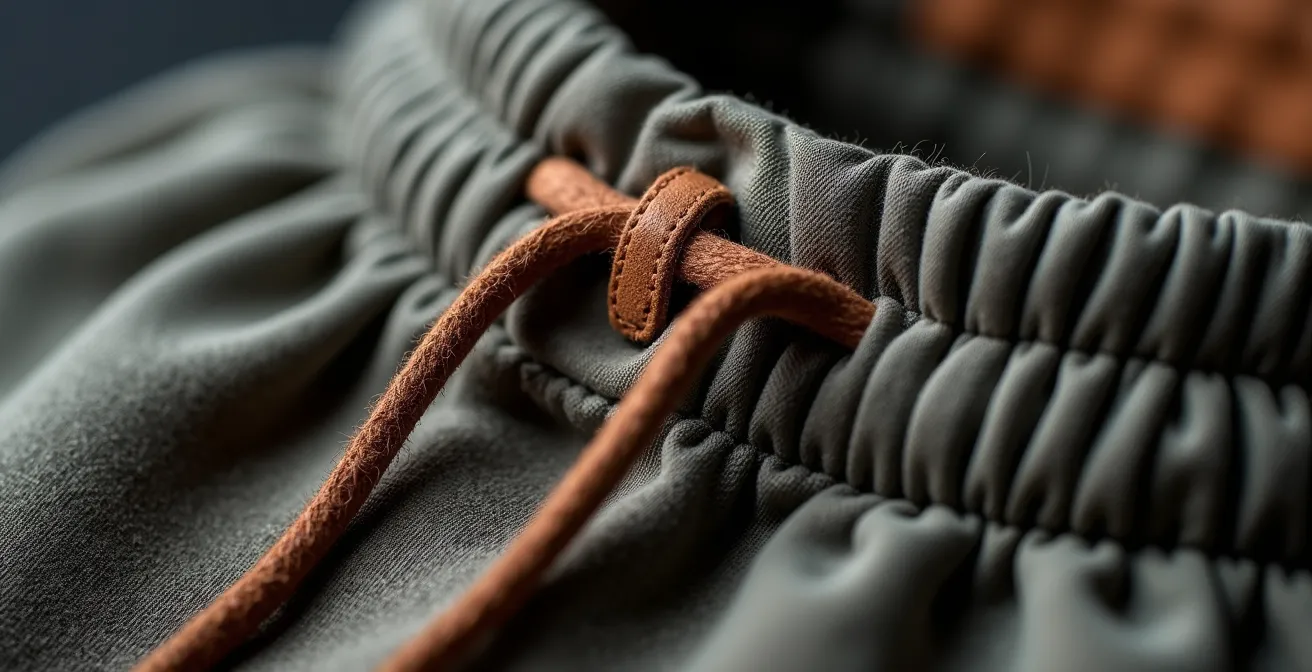
For those willing to go a step further, adding a J-stitch with a sewing machine creates the illusion of a zipper fly. This topstitching is a hallmark of tailored trousers and is a powerful visual cue that tricks the eye into perceiving the joggers as more formal. These modifications require minimal sewing skills but offer maximum impact, transforming your joggers into versatile trousers you can confidently wear anywhere.
Your Action Plan: Auditing Your Loungewear for a Seamless Transition
- Points of Contact: List all the loungewear pieces you intend to wear outside (e.g., grey joggers, black hoodie, white tee).
- Collection: Gather your potential “elevating” items from your wardrobe (e.g., a camel blazer, black loafers, a structured leather bag, a gold chain necklace).
- Coherence Check: Confront the pieces. Does the fabric weight of the joggers look substantial next to the blazer? Does the color palette feel intentional and not accidental?
- Memorability & Polish: Identify the “point of polish.” Is it the structural contrast from the shoes? A sharp haircut? A bold lip? If there isn’t one, the look risks appearing sloppy.
- Integration Plan: Pinpoint the weakest link in the potential outfit (e.g., the flimsy cotton drawstring, worn-out sneakers) and prioritize the fix, such as swapping the cord or choosing the loafers.
How to Layer Crop Tops Over Shirts for a modest Office Look?
The crop top, a staple of modern casual wear, might seem out of place in a work-from-home or modest office context. However, when used as a layering piece, it becomes a sophisticated tool for adding dimension, defining the waist, and playing with proportions. The key is to layer a cropped knit or sweatshirt *over* a longer, classic button-down shirt. This technique provides coverage while creating a chic, fashion-forward silhouette that feels both modern and professional.
To execute this look successfully, focus on contrast and proportion. The most effective combinations pair a soft, fitted knit crop top with a crisp, oversized woven shirt underneath. This mastery of texture contrast is crucial; the structure of the button-down provides a sharp canvas for the softness of the cropped layer. Color theory also plays a role. Using a classic white or light blue shirt as a neutral base allows a neutral-toned crop top (like camel, grey, or black) to stand out in a subtle, sophisticated way.
The “Rule of Thirds,” a principle from art and design, is your best friend here. The cropped layer should end at your natural waist, the button-down hem should peek out below it, and the pants should form the final third of the look. This creates a visually pleasing and balanced proportion that is both flattering and modest. You can further enhance this by rolling the cuffs of the button-down over the sleeves of the cropped sweatshirt, adding another layer of intentional styling.
- Apply the Rule of Thirds: Ensure the crop top ends at your natural waist and the shirt hem peeks out below for balanced proportions.
- Master texture contrast: Pair a soft knit cropped top with a crisp, oversized woven shirt for a sophisticated look.
- Use strategic color theory: A classic white or light blue button-down acts as a perfect neutral canvas for a neutral cropped layer.
- Ensure proper proportions: The structure of an oversized button-down is best complemented by a more fitted cropped top to avoid a bulky silhouette.
Tucked or Untucked: Styling Shirts to Hide the Elastic Waistband
Just like a drawstring, a gathered elastic waistband is a clear sign of casual loungewear. While comfortable, it can disrupt the clean lines of an outfit. The right tucking technique, however, can completely conceal the waistband, creating a smoother, more streamlined silhouette. The choice of tuck depends on the bulk of your joggers and the type of shirt you’re wearing, but the goal is always to create a more intentional waistline definition.
The “French tuck,” where only the very front-center of the shirt is tucked in, is perfect for oversized shirts and sleeker joggers. It defines the waist without adding bulk at the hips. For bulkier joggers or thinner shirts, the “bra tuck” or “rubber band hack” is a clever solution. By tucking the hem of your shirt into your bra band or gathering it with a hair tie before tucking, you can create a cropped effect that floats just above the waistband, hiding it completely without any fabric needing to go inside the pants.
The following guide, adapted from a breakdown of styling techniques for sweatpants, can help you decide which method to use.
| Technique | Best For | How To Execute |
|---|---|---|
| Side/Asymmetrical Tuck | Creating diagonal lines to distract from waistband | Tuck only one side of shirt, leave other loose |
| Bra Tuck/Rubber Band Hack | Bulky joggers with thin shirts | Tuck hem into bra band or gather with hair tie |
| Shirt Tie | Button-down shirts over elastic waists | Leave bottom buttons undone, tie ends at waist |
| French Tuck | Sleek joggers with oversized shirts | Tuck just the front center of shirt |
When wearing a button-down, leaving the bottom buttons undone and tying the ends at the waist is another excellent way to create a defined shape while camouflaging the elastic. Each of these techniques replaces the casual bunching of an elastic waist with a deliberate, styled focal point, elevating the entire look.
Key takeaways
- The foundation of an elevated look is fabric quality; always opt for heavyweight materials (250+ GSM) that offer structure and drape.
- Create “structural contrast” by pairing soft loungewear with rigid, polished items like loafers, a structured bag, or a tailored blazer.
- Polish is intentional. Small details like a clean hair part, a quality accessory, or a specific shirt tuck signal that your comfortable outfit is a conscious style choice, not an accident.
Heavyweight vs. Lightweight Hoodies: Selecting the Right GSM for Seasonal Layering
Not all hoodies are created equal. Just as with joggers, the weight (GSM) of a hoodie’s fabric dictates its function and styling potential. Understanding the difference between a lightweight and heavyweight hoodie is crucial for effective layering and achieving the right silhouette. A lightweight hoodie (under 300 GSM) serves a different purpose than a heavyweight one (400+ GSM), and using them interchangeably is a common styling misstep.
Lightweight hoodies are best treated as “draping layers.” Their thinner construction makes them ideal for wearing *under* other pieces, such as a blazer, denim jacket, or trench coat. They add a layer of warmth and a casual touch without creating excessive bulk. In contrast, a heavyweight hoodie should be treated as an “architectural piece” of outerwear. Its substantial fabric, often a high-quality French Terry, gives it enough structure to function as a jacket replacement in transitional weather. According to textile industry standards, a high-quality loopback sweatshirt should measure between 300-400 g/m2 to provide this kind of structure.
When building an outfit, apply the “One Heavy, One Light” rule. If you’re wearing a heavyweight, architectural hoodie, keep the layer underneath simple and light, like a basic tee. If you’re using a lightweight hoodie for layering, you can pair it with more substantial outerwear. Also, consider the fabric blend. A 100% cotton high-GSM hoodie will offer a softer drape, while a cotton/poly blend will provide more rigidity and structure. Choosing the right GSM isn’t just a technical detail; it’s a strategic decision that defines your outfit’s shape and purpose.
By focusing on these principles of fabric, silhouette, and intentional polish, you can unlock the full potential of your loungewear wardrobe. The next logical step is to audit your own closet and start experimenting with these combinations to find what works best for your personal style.