
Contrary to popular belief, the key to elegantly styling a crop top isn’t about having a certain body type—it’s about mastering visual architecture.
- The 1/3 top to 2/3 bottom ratio is non-negotiable for creating a balanced, elongated silhouette.
- Fabric choice, not just cut, dictates formality; a silk crop top signals professionalism while ribbed cotton remains casual.
Recommendation: Start by pairing a structured crop top with your best high-waisted trousers; it’s a foundational look that never fails to look chic and powerful.
Let’s be honest. For many women, the crop top exists in a category of clothing filed under “aspirational but terrifying.” It’s often seen as the exclusive domain of festival-goers or those with a specific body type, seemingly off-limits for professional settings or for anyone who values a touch of modesty. The common advice—”just pair it with high-waisted pants”—is a start, but it barely scratches the surface of why some cropped outfits look effortlessly chic while others feel awkward and unfinished. This advice overlooks the powerful principles at play.
The secret isn’t about hiding your body or waiting to achieve a certain physique. The secret is to stop thinking about clothes and start thinking like an architect. Styling a crop top elegantly is an exercise in visual architecture: a conscious manipulation of proportion, texture, and silhouette to sculpt a look that is powerful, intentional, and uniquely yours. It’s not about following rigid rules; it’s about understanding the principles of proportion engineering so you can break them with confidence.
This guide will deconstruct those principles. We will move beyond the basics and explore the science behind a great outfit, from the non-negotiable power of the high waist to the subtle language of fabric. You’ll learn how to use layering as a tool for sophistication, how to avoid the one hemline error that visually widens the waist, and how the right accessories can completely transform your look. It’s time to reclaim the crop top as a versatile, empowering piece for every body and every wardrobe.
This article provides a complete roadmap for mastering the art of the crop top. Below, you will find a detailed breakdown of each essential strategy, from foundational principles to advanced styling techniques.
Summary: A Rule-Breaking Guide to Styling Crop Tops
- Why High-Waisted Bottoms Are Essential When Wearing Cropped Lengths?
- How to Layer Crop Tops Over Shirts for a modest Office Look?
- Ribbed Cotton vs. Silk Blends: Which Crop Top Fabric Elevates an Outfit?
- The Hemline Error That Shortens Your Torso and Widens Your Waist
- From Desk to Dinner: The 3 Accessories That Change the Vibe of a Crop Set
- Why Baggy Jeans Can Make You Look Taller If Styled Correctly?
- Loafers vs. Sneakers: Which Shoe Elevates Sweatpants for a Coffee Meeting?
- Wide-Leg vs. Baggy Jeans: Which Cut Flatters a Petite Frame?
Why High-Waisted Bottoms Are Essential When Wearing Cropped Lengths?
The single most important principle in making a crop top look elegant is not the top itself, but what you wear below it. High-waisted bottoms are non-negotiable because they are the key to successful proportion engineering. The goal is to create a visually pleasing balance that elongates the body, and this is achieved by adhering to the “rule of thirds,” a classic principle in art and design. A well-styled outfit visually divides the body into a 1/3 top and 2/3 bottom proportion.
When you wear a crop top with low or mid-rise pants, you risk creating a 50/50 or even a 60/40 split, which visually shortens your legs and draws the eye to the widest part of your midsection. High-waisted styles, by contrast, raise the perceived waistline, creating a much longer leg line and establishing that coveted 1/3 to 2/3 ratio. This is a foundational concept in fashion styling, as it tricks the eye into seeing more length and a more harmonious silhouette, regardless of your actual height or body shape.
This isn’t just about covering your stomach; it’s about taking control of your silhouette’s architecture. By placing the waistband at the narrowest part of your torso, you define your shape and create a flattering focal point. Structured fabrics like denim, twill, or a sturdy ponte knit are particularly effective, as they hold their shape and provide a clean, uninterrupted line from the waist down. The crop top then becomes the perfect, non-bulky complement, ending just at or above this new, elevated waistline.
How to Layer Crop Tops Over Shirts for a modest Office Look?
Layering is the ultimate power move for integrating crop tops into a professional wardrobe. It transforms the piece from a statement of exposure to a tool of sophisticated silhouette sculpting. By layering a structured crop top over a classic shirt or blouse, you get the waist-defining benefit of the cropped length without showing any skin, creating a look that is both modern and office-appropriate. This technique works especially well in creative agencies or business-casual environments where personal style is encouraged.
The key to successful layering is creating a “textural dialogue” between the pieces. A crisp, oversized cotton blouse provides a perfect canvas for a more structured crop top, like a corset style or a tailored vest. This contrast creates a flattering silhouette that is cinched at the torso but fluid and comfortable in the arms and body. The crop top acts almost like a modern waistcoat, adding shape and interest to an otherwise simple base layer. This approach adds dimension and a high-fashion feel to your workwear.
To help visualize this, consider the different combinations that signal different levels of formality. The right pairing can take you from a creative team meeting to a more formal client presentation.
| Base Layer Type | Best Crop Top Pairing | Professional Setting |
|---|---|---|
| Crisp Cotton Button-Down | Structured Bustier | Business Formal |
| Fine-Gauge Turtleneck | Boxy Knit Crop | Creative Office |
| Silk Blouse | Tailored Crop Vest | Client Meetings |
This interplay of fabrics is where the outfit gains its professional edge. The structure of the outer layer against the drape of the inner layer creates visual interest and signals intentionality.
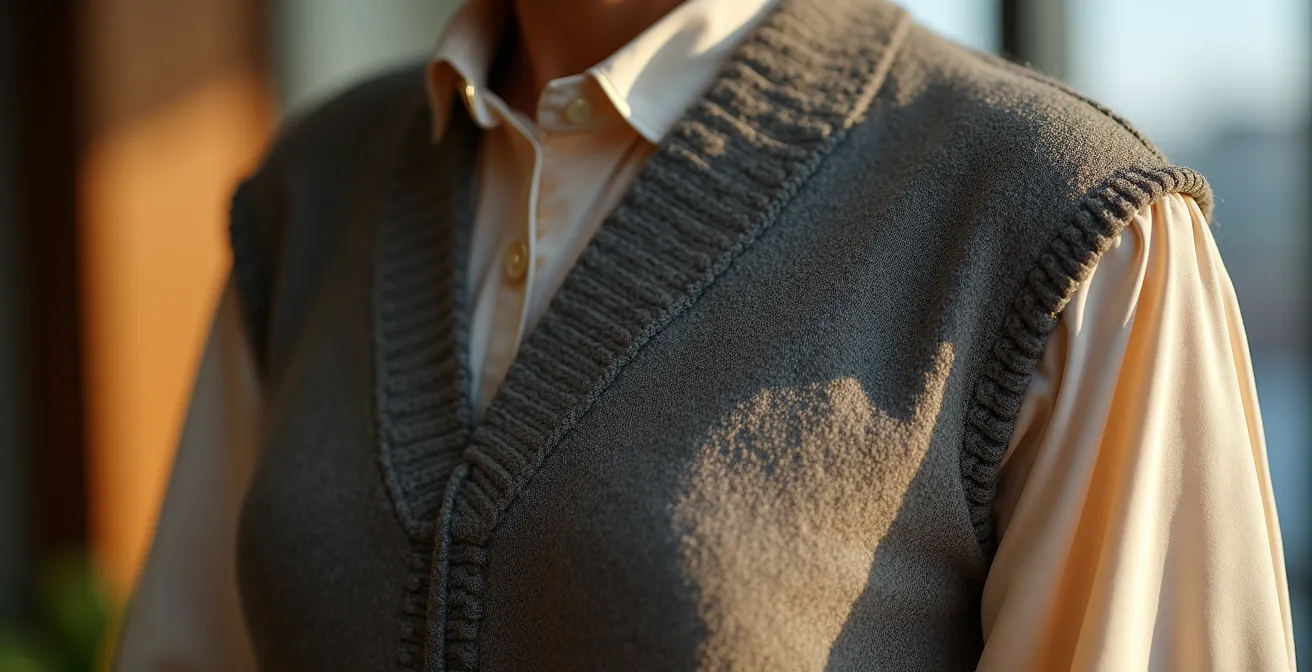
As you can see, the contrast between a structured crop vest and a flowing silk blouse is not just about coverage; it’s about a deliberate play on texture and form. This thoughtful combination is what elevates the entire ensemble, proving that crop tops can be a powerful component of a polished, professional look.
Ribbed Cotton vs. Silk Blends: Which Crop Top Fabric Elevates an Outfit?
While proportion and layering build the structure of your outfit, fabric is what gives it a voice. The material of your crop top is the primary signal of its formality and intent. A common mistake is to focus only on the cut of the top while ignoring that a casual fabric like ribbed cotton will always read as informal, no matter how well it’s styled. For professional or elevated settings, the fabric choice is paramount.
Think of fabrics on a formality scale. At one end, you have matte, textured materials like linen jersey or ribbed cotton. These are inherently casual and best reserved for weekends or highly creative, relaxed offices. As you move up the scale, you encounter fabrics with more structure and a subtle sheen, like ponte knit or cotton sateen, which are excellent for business casual looks. At the most formal end of the spectrum are materials known for their lustrous finish and refined drape, such as silk charmeuse, structured satin, or fine wool blends. These fabrics instantly elevate the crop top, transforming it into a piece of sophisticated tailoring.
This “textural dialogue” is crucial. When you pair a silk-blend crop top with tailored wool trousers, the entire outfit speaks a language of quality and professionalism. Conversely, a ribbed cotton top, even if paired with the same trousers, will create a stylistic disconnect. To build a versatile wardrobe, it’s wise to have a few crop tops in more elevated materials. Here’s a quick guide to help you choose the right fabric for the occasion:
- Most Casual: Ribbed cotton, linen jersey – matte finish with visible texture, suitable for creative casual offices only.
- Mid-Level: Ponte knit, cotton sateen – structured with subtle sheen, appropriate for business casual environments.
- Semi-Formal: Crepe, wool blends – refined texture with professional drape, suitable for client-facing roles.
- Most Formal: Silk charmeuse, structured satin – lustrous sheen signaling formality, appropriate for corporate law and executive settings.
The Hemline Error That Shortens Your Torso and Widens Your Waist
Beyond proportion and fabric, there is a subtle but powerful detail that can make or break a cropped look: the hemline. The most common styling mistake is choosing a crop top with a stark, straight-across horizontal hem. According to body proportion styling principles, any strong horizontal line visually cuts a shape in two. When that line sits across your midsection, it can have the unintended effect of making your torso appear shorter and wider.
This is the “hemline calculus” in action. A straight horizontal line creates a static, blocky effect. To create a more dynamic and flattering silhouette, you should look for crop tops with hems that introduce a diagonal or curved line. An asymmetrical hem, a subtle V-shape, or a curved hemline all work to draw the eye vertically or diagonally, rather than horizontally. This simple switch creates an illusion of length in the torso and a narrower waistline. It’s a small detail that has a massive impact on the overall visual architecture of your outfit.
The right hemline style can be chosen to flatter different body types, but the straight horizontal cut is rarely the best option for anyone.
| Hemline Type | Visual Effect | Best For |
|---|---|---|
| Straight Horizontal | Widens torso, shortens height | Avoid for all body types |
| Subtle V-Shape | Elongates torso, slims waist | All body types |
| Asymmetrical Diagonal | Creates dynamic lines, adds height | Petite and average frames |
| Curved/Scalloped | Softens silhouette, flatters curves | Athletic and rectangular shapes |
This principle is confirmed by styling science, which shows that horizontal lines create 2 short body parts from 1 long part, disrupting a fluid vertical line. Opting for a different hem is an easy way to ensure your crop top works with your body, not against it.
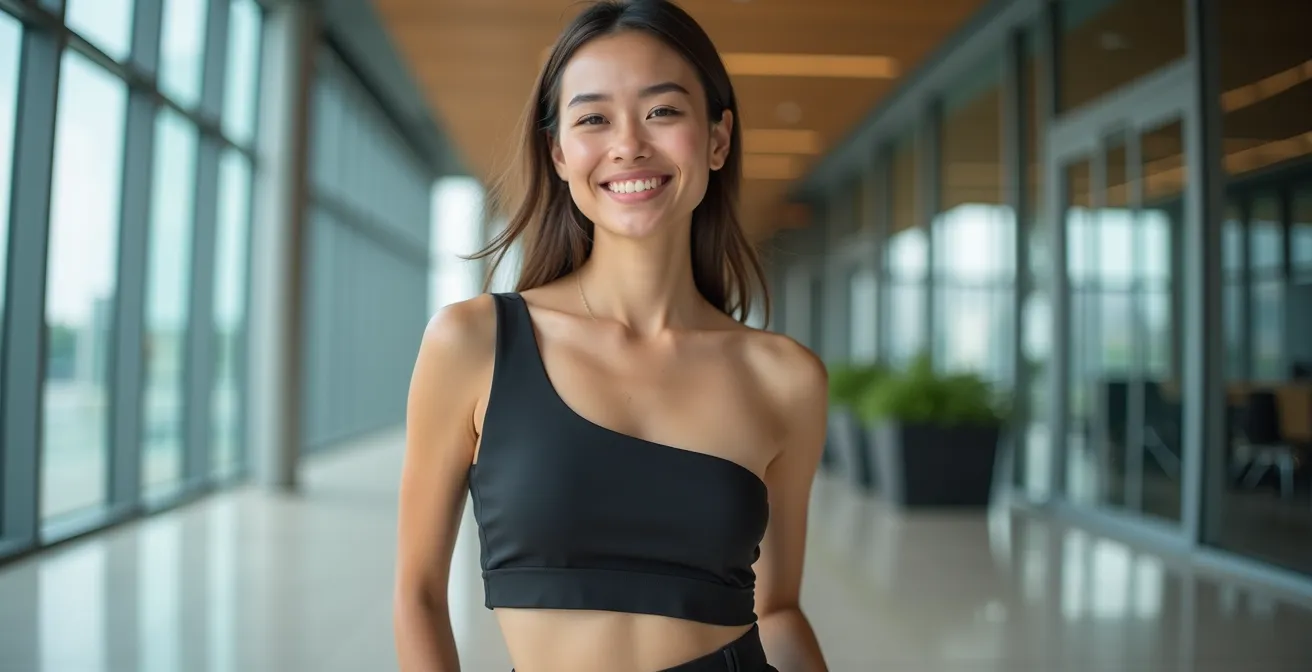
Embracing a non-traditional hemline, as shown here, not only adds a modern, fashion-forward element to your look but also works strategically to enhance your natural proportions. It’s a testament to how small design choices can foster both style and confidence.
From Desk to Dinner: The 3 Accessories That Change the Vibe of a Crop Set
A well-chosen crop top and high-waisted bottom combination is a fantastic canvas. Its true versatility, however, is unlocked through accessories. With a few strategic swaps, you can seamlessly transition a professional daytime look into an elegant evening ensemble. The transformation relies on three key shifts in your accessory game.
First is the “Third Piece Transformation.” During the day, your third piece might be a structured blazer, which signals business. For dinner, swapping that blazer for a soft silk duster or a chic leather jacket instantly changes the formality by an estimated 70%. The silhouette remains polished, but the softer or edgier third piece signals a shift to a more relaxed, social setting. Second is the “Focal Point Shift.” Daytime accessories should be subtle and classic—a simple watch, a thin leather belt. For evening, replace them with statement pieces. Swap the watch for a bold cuff bracelet or exchange delicate studs for dramatic earrings. This draws attention upward toward your face and adds a touch of glamour.
Finally, consider the “Bag Architecture Switch.” A structured leather tote or a top-handle bag is perfect for the office, conveying practicality and professionalism. For the evening, switch to a bag with a softer structure, like a clutch, a soft pouch, or a mini bag with a chain strap. This change in the bag’s architecture is a powerful, non-verbal cue that you’ve left the desk behind. Mastering these swaps makes your crop top set one of the hardest-working outfits in your wardrobe.
- Third Piece Transformation: Swap a structured blazer (desk) for a soft silk duster or leather jacket (dinner) to instantly shift the outfit’s formality.
- Focal Point Shift: Replace subtle daytime accessories (classic watch, thin belt) with statement pieces (bold earrings, metallic clutch) to create an evening focal point.
- Bag Architecture Switch: Exchange a structured leather tote for a soft pouch or chain-strap mini bag to signal a move from professional to social.
Why Baggy Jeans Can Make You Look Taller If Styled Correctly?
It sounds counterintuitive: how can a voluminous garment like baggy jeans create an illusion of height? The answer, once again, lies in proportion and visual continuity. When styled incorrectly, baggy jeans can overwhelm a frame and shorten the leg line. But when styled correctly, they can create a powerful, unbroken vertical line that tricks the eye into seeing length.
The most effective technique is creating a monochromatic or tonal column of color. Pairing baggy jeans with a fitted or cropped top in a similar shade (e.g., dark wash denim with a navy top) creates a seamless visual flow from the waist down, or even from the shoulders down. This “column of color” method minimizes horizontal breaks, encouraging the eye to travel vertically up the body, which translates to perceived height. The bagginess of the jean becomes secondary to the long, clean line you’ve created.
However, this only works if you follow a few critical rules of silhouette sculpting. The volume of the jeans must be balanced by a fitted top to maintain the essential 1/3 to 2/3 proportion. Without this balance, the entire look becomes shapeless. Furthermore, the hem of the jeans is crucial. To avoid a “puddling” effect that visually shortens the legs, the hem should just “kiss” the top of your shoe, creating a crisp break point. Following these rules turns baggy jeans from a potential style challenge into a powerful tool for elongating your frame.
Your Action Plan: Verifying the Tall-Looking Baggy Jean Fit
- The Hem Breakpoint: Check the hem of your baggy jeans. Does it just touch the top of your shoe, or does it “puddle” on the floor? Adjust the length to avoid the shortening effect of excess fabric.
- Proportion Balance: Look at your top. Is it fitted or cropped? You must pair voluminous bottoms with a streamlined top to maintain the universal 1/3 to 2/3 proportion.
- Color Continuity: Assess your color palette. Are your jeans and top in the same color family? For maximum elongating effect, consider matching your shoes as well to create one uninterrupted vertical line.
- Waistline Definition: Ensure the jeans are high-waisted and that the waist is clearly visible. Tucking in your top or choosing a crop top is essential to define this point.
- Fabric Drape: Feel the denim. Is it overly stiff and bulky, or does it have some drape? Lighter, more fluid fabrics are less likely to overwhelm your frame while still providing the desired volume.
Loafers vs. Sneakers: Which Shoe Elevates Sweatpants for a Coffee Meeting?
The casualization of wardrobes has brought comfortable items like sweatpants into everyday rotation, but a question often arises: how do you make them look intentional and polished, not like you just rolled out of bed? The answer lies at your feet. The choice of shoe is the single most important factor in elevating a pair of sweatpants for a smart-casual setting like a coffee meeting.
The deciding factor is structural formality. Different shoes send different signals based on their shape, material, and construction. A classic athletic sneaker, with its soft, unstructured form and sporty detailing, screams “gym” or “weekend errand.” It offers comfort but zero elevation. On the other end of the spectrum, a leather loafer boasts a high level of structure: a defined shape, a hard sole, and a polished material. This inherent structure is a powerful signal of professionalism and polish. When paired with well-fitting sweatpants (ideally a tailored, tapered cut), the loafer’s formality instantly lifts the entire outfit into the “smart casual” category.
There is a middle ground: the minimalist leather sneaker. With its clean lines, premium material, and lack of overt athletic branding, it signals a more considered, “smart casual” vibe than a running shoe. It’s a viable option for creative meetings but lacks the definitive polish of a loafer. For a coffee meeting where making a good impression matters, the loafer is the undisputed winner.
Here’s how the options break down based on the signals they send:
| Shoe Type | Structure Level | Formality Signal | Best With Sweatpants For |
|---|---|---|---|
| Leather Loafers | High (defined shape, hard sole) | Professional/Polished | Coffee meetings, casual office |
| Athletic Sneakers | Low (soft, unstructured) | Casual/Sporty | Weekend errands only |
| Minimalist Leather Sneakers | Medium (clean lines, premium material) | Smart Casual | Creative meetings, brunch |
Key Takeaways
- Mastering the 1/3 top to 2/3 bottom proportion with high-waisted bottoms is the non-negotiable foundation for any elegant crop top outfit.
- Layering a crop top over a shirt or using fabrics like silk and crepe are key strategies for making the style office-appropriate.
- Avoid straight, horizontal hemlines on crop tops; asymmetrical or curved hems create a more dynamic and flattering line that elongates the torso.
Wide-Leg vs. Baggy Jeans: Which Cut Flatters a Petite Frame?
For those with a petite frame, navigating voluminous denim styles like wide-leg and baggy jeans can feel particularly challenging. The fear of being overwhelmed by fabric is real. However, both styles can be incredibly flattering, provided you choose the right cut based on its specific architectural properties. The choice between wide-leg and baggy is a choice between two different ways of creating an illusion of length.
Wide-leg jeans typically have a silhouette that is fitted through the hips and then flares out evenly to the hem, creating a distinct A-line shape. For a petite frame, this can be extremely effective when paired with an ultra-high rise. The continuous, uninterrupted flare from the thigh downwards creates a long vertical line, especially when the hem skims the floor, concealing the shoe. This style is about creating a single, elongated column in the lower body.
Baggy jeans, on the other hand, are looser throughout the entire leg, including the thigh and hip. The key to making them work for a petite frame is, once again, the rise. Fashion proportion studies indicate that an ultra-high rise creates up to 4 inches more visual leg length. This is critical for baggy styles. By starting the volume high on the waist, you maximize the leg line before the volume even begins. For petites, it’s also crucial to look for baggy jeans made from lighter-weight denim with more drape, as stiff, heavy fabrics can add too much bulk. So, which is better? For guaranteed, foolproof elongation, the high-rise wide-leg is often the safer bet. For a more fashion-forward, relaxed look, the baggy jean can work beautifully if you prioritize an ultra-high rise and a draping fabric.
- Priority 1 – Rise Height: For either style, choose an ultra-high rise that sits 2-3 inches above your natural waist to maximize the leg line.
- Priority 2 – Fabric Weight: Select lighter weight denim with drape (Tencel blends, lightweight cotton) to avoid overwhelming a small frame. This is especially important for baggy styles.
- Priority 3 – Micro-Details: Look for proportionally smaller back pockets placed higher on the seat, thinner belt loops, and a less exaggerated width to keep the scale in harmony with your frame.
Ultimately, wearing a crop top with confidence has nothing to do with conforming to a certain standard and everything to do with understanding these principles of proportion, fabric, and silhouette. By learning to think like a stylist, you can transform this seemingly tricky piece into one of the most powerful and versatile items in your wardrobe. Start experimenting with these concepts to craft looks that feel authentic, elegant, and uniquely you.