
The secret to professional joggers isn’t the blazer you pair them with, but the material science and structural engineering of the pants themselves.
- Prioritize heavyweight fabrics (over 300 GSM) and matte “City Tech” finishes to avoid a cheap, athletic look.
- Look for blends with at least 5-10% elastane for shape retention to prevent baggy knees after sitting.
Recommendation: Choose joggers with bonded or zippered pockets over bulky slash pockets to create a slimmer, more tailored hip silhouette.
The era of remote work has created a universal wardrobe dilemma: how to remain supremely comfortable without appearing unprofessional on a day full of video calls. For many who now refuse to wear “hard pants,” joggers have become the default choice. Yet, there’s a fine line between looking relaxed and looking like you just rolled out of bed. The common advice—to simply throw on a nice shirt or a blazer—misses the fundamental point. That approach tries to hide the joggers, treating them as a sartorial compromise that needs a cover-up.
This guide proposes a different philosophy. The key to elevating joggers from gym wear to a smart-casual staple isn’t about what you pair them with; it’s about the intrinsic qualities of the joggers themselves. True professional polish comes from understanding the material science, fabric weight, and structural details that separate a high-end, tailored jogger from a standard pair of sweatpants. It’s about choosing a garment that is engineered for a professional context, not one adapted from the gym.
By focusing on elements like fabric GSM (grams per square meter), material blend, pocket construction, and the finish of the textile, you can build a wardrobe of joggers that stand on their own merit. These are pants that don’t need to be hidden by a half-tucked shirt or a blazer; they form the foundation of a sharp, modern, and unapologetically comfortable uniform. This article will break down the specific, detail-oriented criteria that make all the difference.
To help you master this new approach to smart-casual dressing, we’ll explore the technical and stylistic details that transform joggers into a legitimate work-from-home essential. This table of contents outlines the key areas we will cover.
Summary: Mastering the Art of the Professional Jogger
- Why Your Joggers Bunch at the Ankle and How to Fix It?
- How to Distinguish Between “Gym Tech” and “City Tech” Fabrics?
- Tucked or Untucked: Styling Shirts to Hide the Elastic Waistband
- The Material Blend That Prevents Knees from Bagging Out After Sitting
- Zippered Pockets vs. Slash Pockets: Which Creates a Slimmer Hip Silhouette?
- The No-Sweat Cardio Routine: Is It Possible to Train Without Showering?
- Why Heavyweight Jersey Looks More Expensive Than Thin Cotton?
- How to Transition Loungewear from Home Office to Social Outings Seamlessly?
Why Your Joggers Bunch at the Ankle and How to Fix It?
One of the most common signs of a low-quality jogger is bunching at the ankle. This happens when the fabric lacks sufficient weight and structure, causing it to collapse onto the elastic cuff instead of draping cleanly. The solution lies in understanding fabric weight, measured in Grams per Square Meter (GSM). A flimsy, see-through t-shirt might be 150 GSM, while premium, heavy-duty hoodies can exceed 400 GSM.
For joggers intended to look sharp and tailored, you need a fabric with enough substance to create a smooth, uninterrupted line from the thigh to the ankle. This is what we call “structural integrity.” According to textile industry standards, high-quality jogger fabrics in the 280-360 GSM range offer the optimal balance of comfort and structure. This weight ensures the material has enough mass to hang properly, mimicking the clean drape of a traditional trouser and eliminating unsightly bunching.
When shopping, look for joggers described as “heavyweight” or “structured.” If the GSM is listed, aim for 300 or higher. The fix for bunching isn’t a styling trick; it’s a purchasing decision. By choosing a jogger with the right fabric density, you ensure the garment has the foundational quality needed for a professional appearance.
How to Distinguish Between “Gym Tech” and “City Tech” Fabrics?
Not all technical fabrics are created equal. The material appropriate for a high-intensity workout is often the opposite of what you need for a professional setting. The key is to distinguish between “Gym Tech” and “City Tech.” Gym Tech is designed for performance above all: it’s often shiny, makes a “swishing” sound, and prioritizes moisture-wicking over a sophisticated appearance. It creates visual and auditory noise that reads as purely athletic.
“City Tech,” on the other hand, is engineered for the intersection of life and style. It borrows performance attributes like stretch and wrinkle resistance but presents them in a refined package. The finish is matte and non-reflective, the movement is silent, and the construction often involves advanced techniques like bonded or laser-cut seams that lie perfectly flat. This focus on a subtle, high-quality finish is paramount for a professional look. The close-up below highlights the stark difference in texture and finish between the two types.
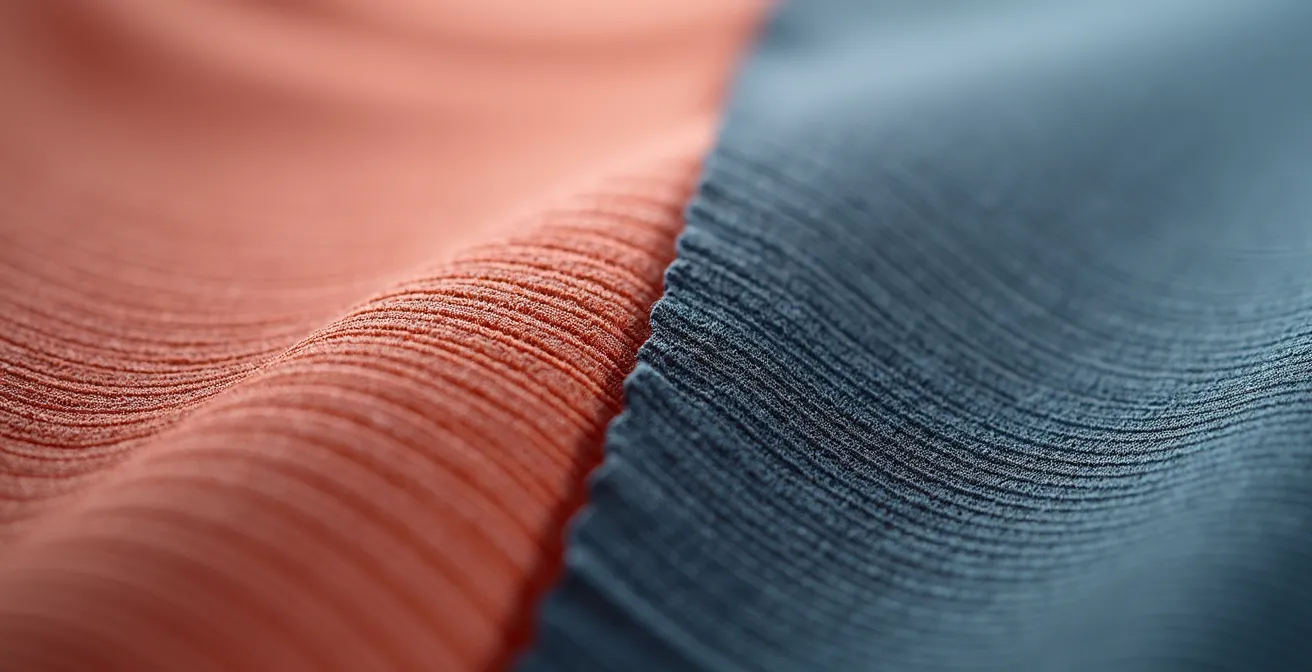
As this detailed view shows, the matte, subtle texture of City Tech fabric on the right presents a far more elevated and professional aesthetic than the glossy, synthetic look of Gym Tech on the left. The following table breaks down the key differences to look for.
This table, based on an analysis of different jogger materials, provides a clear guide for identifying fabrics suitable for a smart-casual wardrobe.
| Feature | Gym Tech | City Tech |
|---|---|---|
| Finish | High sheen, reflective | Matte, non-reflective |
| Sound | Swish sound when moving | Silent movement |
| Construction | Stitched seams | Bonded or laser-cut seams |
| Stretch | 2-way stretch | 4-way structured stretch |
| Water Resistance | Basic moisture-wicking | DWR coating standard |
| Wrinkle Resistance | Not prioritized | Engineered for sitting |
Tucked or Untucked: Styling Shirts to Hide the Elastic Waistband
The elastic or drawstring waistband is the single biggest giveaway that you’re wearing joggers. While comfortable, it’s an overtly casual detail that can undermine a professional look. The goal isn’t necessarily to hide it completely, but to style your top in a way that breaks up the horizontal line of the waistband and creates a more intentional, polished silhouette.
A full tuck can often look too formal or can accentuate the gathered fabric of the waistband. Leaving a shirt completely untucked can look sloppy, especially if the shirt is too long. The solution lies in a strategic partial tuck, often called the “French Tuck.” This technique involves tucking in only the very front of your shirt, letting the sides and back hang loose. This creates a casual, effortless look while still defining the waist and drawing the eye away from the elastic band.
This styling choice is more than just a trend; it has a demonstrable effect on the overall silhouette, making it appear more considered and less like an afterthought.
Case Study: The French Tuck Technique
To validate this approach, a test conducted by Men’s Health fashion editors involved styling 40 different jogger models over two weeks. They found that the partial tuck technique was consistently successful in creating a diagonal line that distracted from the elastic waistband. This styling choice maintained a relaxed feel while adding a crucial element of polish, working especially well with heavyweight t-shirts and button-down shirts in business-casual contexts.
The Material Blend That Prevents Knees from Bagging Out After Sitting
There’s nothing that screams “sloppy” more than a pair of joggers with baggy, stretched-out knees. This happens after just a few hours of sitting at a desk when the fabric lacks “shape memory” or “recovery.” The culprit is usually 100% cotton or a low-quality blend that deforms under pressure and doesn’t bounce back. To maintain a sharp silhouette all day, you need a fabric that is engineered for recovery.
The secret is in the blend. The inclusion of a small but crucial percentage of synthetic stretch fibers, like elastane or spandex, gives the fabric the resilience it needs. According to textile composition research, a blend containing 5-10% elastane/spandex provides the optimal recovery to prevent bagging. This allows the fabric to stretch with your movements while you’re seated but then snap back to its original shape when you stand up, preserving the clean, tapered line of the leg.
Beyond the blend, the weave itself also plays a role. Look for dense constructions like Ponte knit or double-knit fabrics. These materials have more inherent structure than a simple single jersey, further contributing to their ability to hold their shape. Choosing a jogger with the right material science ensures your pants look as crisp at 5 PM as they did at 9 AM.
Your 5-Point Audit for Joggers That Hold Their Shape
- Check the Tag: Look for a blend with at least 5% elastane/spandex for optimal recovery. A composition of 85% premium cotton/nylon and 10-15% elastane is ideal.
- Analyze the Weave: Prioritize dense constructions like Ponte knit or double-knit fabrics over simple jersey for superior structural integrity.
- Assess the Cotton Quality: If it’s a cotton blend, look for premium varieties like Pima or Supima, which have longer fibers and better durability.
- Consider the Weight: Select fabrics within the 250-350 GSM range, as this density provides the necessary structure to resist deformation.
- Perform a Stretch Test: Before buying, gently stretch a section of the fabric (like the knee) for a few seconds and see how quickly and completely it returns to its original form.
Zippered Pockets vs. Slash Pockets: Which Creates a Slimmer Hip Silhouette?
Pockets are a functional necessity, but their design can make or break the silhouette of a pair of joggers. Traditional angled “slash” pockets, common on chinos and sweatpants, have a major flaw: they tend to flare out, especially when you’re sitting or have items in them. This adds visual bulk directly at the hips, widening your silhouette and creating a less-than-sleek profile.
For a truly tailored look, the goal is silhouette engineering—making deliberate choices that create a clean, uninterrupted line. This is where zippered pockets excel. When pockets are integrated into a vertical seam or feature a bonded, “invisible” zipper, they lie perfectly flat against the body. This eliminates the extra fabric and gaping associated with slash pockets, resulting in a significantly slimmer and more modern appearance. The visual impact is immediate and substantial, as seen in the profile comparison below.
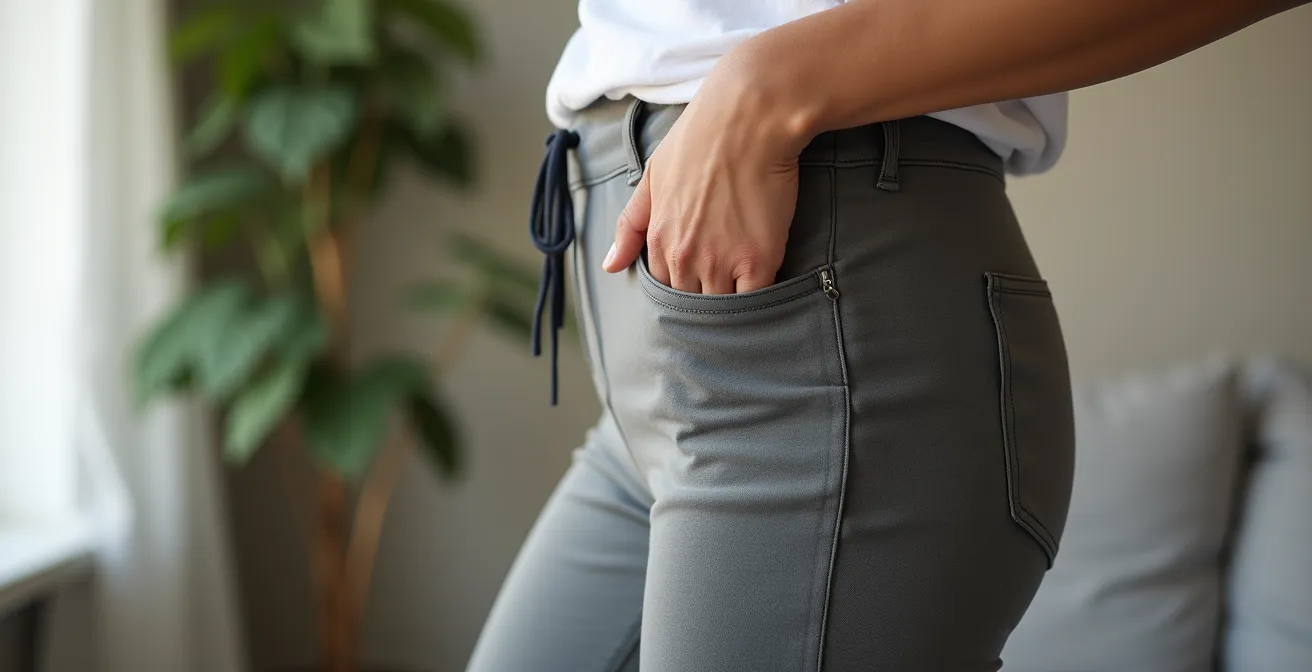
This choice goes beyond mere aesthetics; it has a measurable impact on the garment’s profile, contributing to a look that feels more intentional and less casual.
Pocket Design Impact Study
In an extensive test of jogger styles, Men’s Health confirmed the significant impact of pocket design. They found that hidden or zippered pockets dramatically reduced hip bulk. Testers noted that the vertical orientation of a zipper creates a lengthening visual effect, whereas traditional slash pockets could add up to 1.5 inches of perceived width at the hips. Styles with bonded, low-profile pockets consistently scored the highest in the silhouette category.
The No-Sweat Cardio Routine: Is It Possible to Train Without Showering?
The versatility of modern “City Tech” joggers extends beyond just looking good. Their advanced fabric properties—moisture-wicking, breathability, and often odor-resistance—make them suitable for a “no-sweat” workout, allowing you to incorporate light activity into your workday without needing a full shower afterward. This is perfect for breaking up long periods of sitting and boosting your energy levels.
A no-sweat routine focuses on low-impact movements that raise your heart rate slightly without inducing heavy perspiration. Think of activities you can do right by your desk: a series of bodyweight squats, walking lunges across the room, calf raises, or a dynamic stretching sequence. The goal is movement, not exhaustion. A 5-10 minute session is all it takes to get your blood flowing.
After your light workout, the key is a quick and efficient refresh protocol to transition back into work mode. The breathability of your City Tech joggers means they won’t feel damp, but a few extra steps will ensure you feel and look completely put-together for your next video call.
- Keep facial cleansing wipes in a desk drawer for a quick face refresh.
- Use a travel-size dry shampoo spray on roots and massage it through your hair.
- Ensure you’ve applied a strong aluminum-based antiperspirant before the activity.
- If you did sweat, a quick change into an identical fresh pair of City Tech joggers is a simple fix.
- Finish with a light cologne or body spray for instant freshness.
Why Heavyweight Jersey Looks More Expensive Than Thin Cotton?
When you see a pair of joggers that looks undeniably premium, it’s almost always due to the fabric’s weight and substance. Heavyweight jersey or French terry simply looks and feels more luxurious than its thin, flimsy counterparts. This perception of quality is rooted in two things: physical drape and subconscious association.
First, the drape. Heavyweight fabric has enough mass to hang cleanly from the body. It doesn’t cling to the wrong places or show every lump and bump. Instead, it creates a smooth, flattering line that mimics the fall of a well-made wool trouser. This substantiality is a key component of a tailored silhouette. Industry analysis shows that premium joggers often use a 300-400 GSM French Terry, which has the ideal structure for this sophisticated drape.
Second, there is a powerful subconscious association at play. As personal stylist Sarah Gilfillan notes, this quality is deeply connected to our perception of traditional menswear.
Heavyweight fabric has enough mass to fall cleanly from the hip, creating a smooth line that mimics a tailored trouser. This substantiality is subconsciously associated with quality and traditional menswear.
– Sarah Gilfillan, SartoriaLab
In essence, heavyweight cotton jersey borrows a key characteristic—engineered drape—from formal tailoring, which is why our eyes read it as more expensive and professional. It’s a tactile and visual cue that signals quality and investment, moving the garment far away from its purely athletic origins.
Key takeaways
- The secret to sharp joggers is prioritizing material science: look for heavyweight fabrics (300+ GSM) and matte “City Tech” finishes.
- Ensure a proper fit and all-day shape by choosing blends with 5-10% elastane to prevent baggy knees.
- Pay attention to details like flat, zippered pockets, which create a slimmer silhouette than bulky slash pockets.
How to Transition Loungewear from Home Office to Social Outings Seamlessly?
Once you’ve invested in joggers with the right material and structural qualities, transitioning them from your home office to a casual social setting becomes remarkably simple. The final step is about smart layering and appropriate footwear choices that complement the elevated nature of your joggers. It’s not about hiding them, but about building a cohesive, smart-casual look around them.
The most effective strategy is the “Third-Piece Rule.” Adding a structured third item—such as a bomber jacket, a wool overshirt, or an unstructured blazer—instantly frames the outfit and signals a shift from “at-home” to “out-and-about.” This layer adds polish and intention to the entire look.
Case Study: The Third-Piece Rule in Practice
A fashion editor documented his transition strategy, confirming that adding a structured third piece immediately elevated joggers to a smart-casual level. He found that a simple wool overshirt paired with heavyweight joggers and clean leather sneakers was a successful formula for dinner outings, coffee meetings, and casual office days, proving the versatility of the approach.
Finally, your footwear choice is the ultimate arbiter of formality. Swapping your house slippers for a pair of clean leather sneakers or loafers is non-negotiable. The right shoes anchor the outfit and define its context. This guide helps clarify which footwear is appropriate for which setting.
| Footwear Type | Formality Level | Best Setting |
|---|---|---|
| Slippers/Slides | Home Only | Working from home |
| Athletic Sneakers | Very Casual | Errands, gym |
| Clean Leather Sneakers | Smart Casual | Coffee shops, casual meetings |
| Loafers | Business Casual | Dinner, date night |
| Chelsea/Chukka Boots | Elevated Casual | Evening events, upscale venues |
Start applying these material-first principles to your wardrobe. By focusing on fabric weight, blend, and construction details, you can build a collection of joggers that deliver uncompromising comfort without sacrificing an ounce of professional polish.