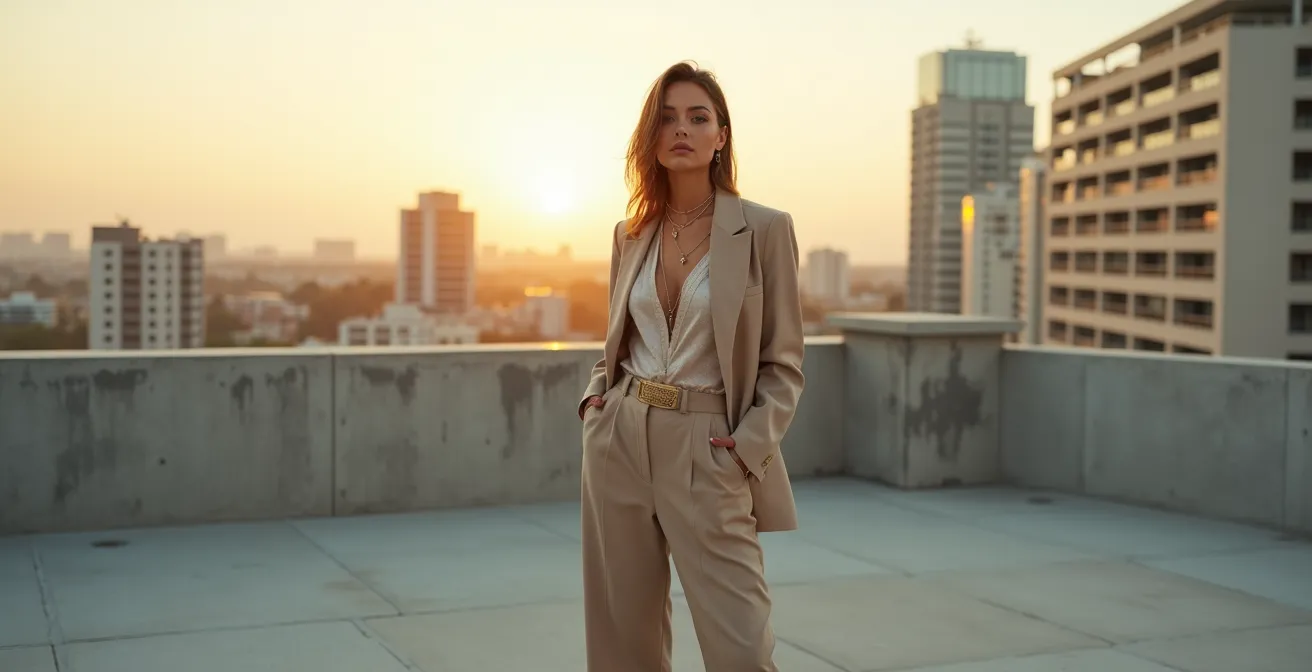
Adopting the Y2K trend as an adult isn’t about reliving your teenage wardrobe; it’s about reinterpreting its playful energy with sophistication.
- Success lies in mastering styling principles like proportional contrast and textural dialogue, not just collecting nostalgic items.
- A modern translation focuses on updating silhouettes and using intentional Y2K accents rather than attempting a literal recreation.
Recommendation: Instead of a head-to-toe look, integrate one or two refined Y2K elements into your existing polished, contemporary wardrobe.
The return of early 2000s fashion has presented a unique challenge. For those of us who wore low-rise jeans, butterfly clips, and velour tracksuits the first time around, revisiting the Y2K aesthetic can feel like a step back in time—and not always in a good way. The internet is filled with advice to simply “mix modern with vintage” or “choose one statement piece.” While well-intentioned, this guidance often misses the fundamental point. It treats the trend as a collection of items to be worn, rather than an energy to be translated.
The fear is valid: how do you embrace the fun and optimism of Y2K without looking like you’re wearing a costume or desperately clinging to your youth? The answer has little to do with whether you should or shouldn’t wear a baby tee. It has everything to do with shifting your perspective from collecting nostalgic artifacts to mastering the core styling principles that separate a chic homage from a dated imitation. This is not about recreating the past. It’s about understanding its language and speaking it with a modern, sophisticated accent.
This guide moves beyond the superficial to explore the “why” and “how” of a grown-up Y2K aesthetic. We will dissect the styling mistakes that instantly cheapen a look and provide a framework based on proportion, texture, and intention. By the end, you will have the confidence not just to wear the trend, but to own it in a way that feels authentic, elegant, and entirely current.
For those who prefer a visual summary, the following video offers a compelling explanation of the Y2K aesthetic’s core components and cultural impact, serving as a perfect primer for the practical advice in this guide.
To navigate this revival with precision, we’ve structured this article to address the most pressing questions for the modern woman. From the cultural forces driving the trend to the specific details that elevate a look, this is your complete playbook for a sophisticated take on Y2K.
Summary: A Stylist’s Playbook for the Modern Y2K Aesthetic
- Why Is Early 2000s Fashion Trending Again After Only 20 Years?
- How to Spot Authentic Vintage Y2K Items on Resale Platforms?
- Low-Rise vs. Mid-Rise: Which Denim Cut Works for Casual Fridays?
- The Styling Mistake That Makes Y2K Layers Look Sloppy Instead of Chic
- Frosted Lipgloss Then and Now: 3 Updates for a Polished 2024 Look
- Toy Sales Driven Scripts: How Merchandise Dictates Character Survival?
- Why Do We Pay 300% More for a Screen-Printed Cotton T-Shirt?
- Transforming a Basic Outfit: The 3 Accessories That Elevate Your Look Instantly
Why Is Early 2000s Fashion Trending Again After Only 20 Years?
The resurgence of Y2K fashion isn’t merely a random blip in the trend cycle; it’s a complex cocktail of digital nostalgia, economic shifts, and a cultural yearning for pre-social media optimism. For millennials, it represents a sentimental look back at their formative years, while for Gen Z, it’s an exploration of a “vintage” era they never experienced firsthand. This digital-first revival, amplified by platforms like TikTok, has created a powerful feedback loop where micro-trends explode in popularity overnight. In fact, recent market analysis reveals Y2K fashion leads vintage popularity with 15× faster growth than traditional retail, a staggering velocity driven by social media discovery.
However, this nostalgia comes with necessary critique. As Gianluca Russo notes in “The Power of Plus,” the aesthetic is also a reminder of a less inclusive time in fashion. He observes, “Y2K style is largely grounded in thinness,” a point that today’s consumer is keen to challenge and redefine. The 2024 version of Y2K, therefore, is not a carbon copy. It’s a dialogue with the past, keeping the playful spirit while consciously discarding the outdated body ideals. It’s less about the specific items and more about the mood: a fusion of futuristic optimism and unabashed fun, reinterpreted for a more aware and diverse audience.
Case Study: The Power of Nostalgic Influence
The potent combination of celebrity and nostalgia was perfectly demonstrated by a recent resale event. According to industry reports, Vestiaire Collective’s Paris Hilton Y2K sale generated nearly 10 billion impressions. This event highlights how a single, influential figure from the era can act as a catalyst, dramatically amplifying visibility on resale platforms and validating nostalgia-driven purchasing decisions on a global scale. It proves that the trend is fueled as much by memory and personality as it is by the clothing itself.
Understanding these drivers is the first step to wearing the trend well. It allows you to engage with the aesthetic’s fun and energy while remaining mindful of its history, enabling a more intentional and sophisticated approach.
How to Spot Authentic Vintage Y2K Items on Resale Platforms?
As the Y2K trend saturates the market, the line between authentic vintage and modern reproduction becomes increasingly blurred. For a truly sophisticated take, sourcing genuine pieces from the era can add an unmatched layer of authenticity. Unlike fast-fashion knockoffs, original garments possess a specific weight, construction, and character. Knowing how to identify these details is crucial for anyone navigating resale platforms like Depop, eBay, or The RealReal. It’s the difference between finding a treasure and wasting money on a cheap imitation.
The key lies in training your eye to look beyond the general style and focus on the small, tell-tale markers of the period. Pay close attention to the details that manufacturers have since changed, such as the specific fonts used on tags, the countries of manufacture common for brands at the time, and the very feel of the materials. Early 2000s manufacturing had distinct quirks that are hard to replicate perfectly.
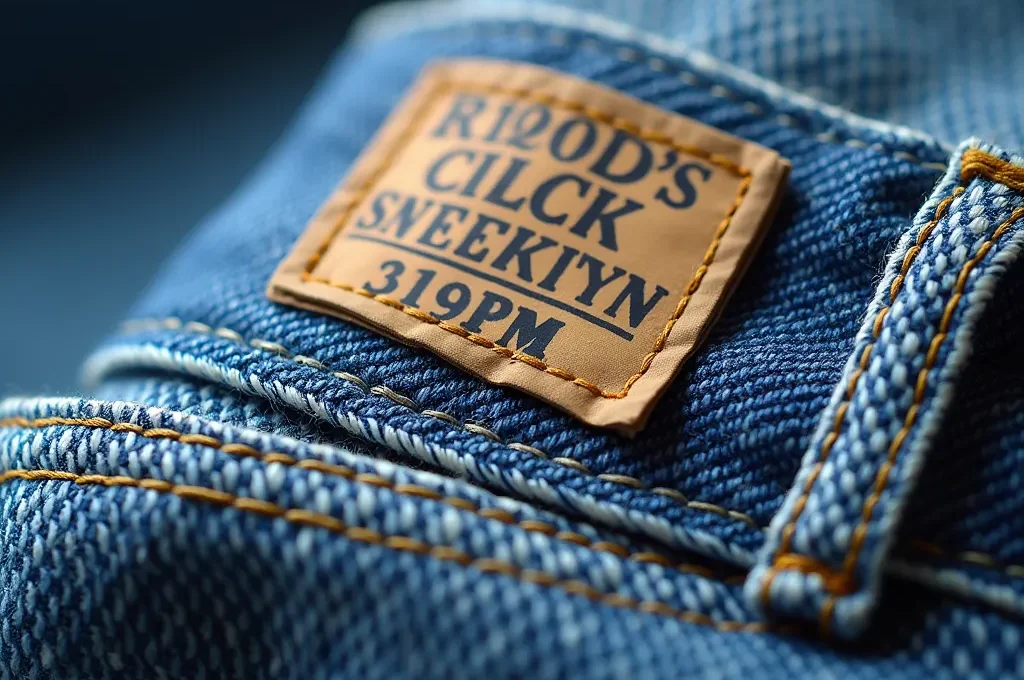
This macro view of a vintage garment reveals the importance of texture and construction. As seen here, the specific weave of the denim and the style of stitching are subtle but powerful indicators of a piece’s era. Learning to recognize these tactile qualities is a skill that elevates you from a casual shopper to a discerning collector. The following checklist provides a practical framework for your next vintage hunt.
Your Action Plan: 5 Steps to Authenticate Vintage Y2K Finds
- Analyze Brand Tags: Scrutinize the tags for specific fonts and “Made in” countries typical of the era. Many iconic Y2K brands produced in places like Turkey, the USA, or Mexico, which can be an initial clue.
- Assess the Fabric Feel: Feel the material. Authentic early 2000s polyester-blends, denims, and velours have a distinct, often heavier texture and weight compared to modern, cost-engineered equivalents.
- Examine the Hardware: Look closely at zippers, buttons, and clasps. Y2K-era hardware was often chunkier, shinier, and more prominent than the discreet versions used today. Brands like YKK will have different zipper models.
- Check for Outdated Codes: Before QR codes became standard, many brands used specific serial number formats or simple style numbers. Research the format for the brand you’re examining to see if it aligns with the 1999-2005 period.
- Verify Logo Proportions: Y2K was the era of logomania. Logos were often prominently placed and significantly oversized compared to today’s more subtle branding. Cross-reference the logo’s size and placement with archival photos.
Low-Rise vs. Mid-Rise: Which Denim Cut Works for Casual Fridays?
Perhaps no single garment defines the Y2K era more than the low-rise jean. Its return has been met with both excitement and trepidation. For an adult wardrobe, especially in a smart-casual context like an office “Casual Friday,” the question of rise is not just about comfort—it’s about silhouette architecture. The goal is to nod to the trend without sacrificing polish. A truly low-rise jean can be challenging, as it dramatically alters your body’s proportions and can feel overly casual or revealing for a professional setting.
The modern, sophisticated solution is often found in the middle ground. A contemporary mid-rise jean (sitting just below the navel) offers a perfect compromise. It provides a more flattering and versatile foundation, allowing you to incorporate other Y2K elements, like a fitted top or a statement belt, without the stylistic risks of an ultra-low waistline. This choice allows you to control the narrative of your outfit, referencing the trend’s silhouette in a way that feels intentional and grown-up. For those who do want to venture into a true low-rise, opt for a relaxed or straight-leg cut rather than a skinny fit to keep the look current and avoid it feeling dated.
I can still vividly recall the cowl-neck black top I wore with my knee-length stonewash denim skirt and a choker for New Year’s Eve 1999. I loved that outfit at the time, but I know there isn’t much from it I’d wear to the office today.
– Fashion Editor, Who What Wear
This sentiment captures the essence of the challenge. The key is isolating the elements that still work and translating them. A knee-length denim skirt, for instance, can be modernized with a crisp silk blouse and heeled boots, while the cowl-neck top might be better left in 1999. It’s about selective editing, not wholesale replication.
The Styling Mistake That Makes Y2K Layers Look Sloppy Instead of Chic
Layering was a cornerstone of Y2K style, but it was often haphazard: a dress over jeans, a camisole over a t-shirt, multiple tank tops at once. The biggest mistake in recreating this today is ignoring the principle of proportional contrast. In the 2000s, layers were often tight-on-tight, creating a bulky and visually confusing effect. For a sophisticated 2024 interpretation, the layers must create a deliberate and pleasing dialogue of shapes. This means pairing a fitted Y2K element with an oversized modern piece.
For example, instead of a tight camisole over a tight long-sleeve tee, layer a delicate silk slip dress or camisole under a structured, oversized blazer. This creates a powerful contrast between the fluid, feminine layer and the sharp, masculine tailoring. The sliver of the Y2K piece that “peeps” out looks intentional and chic, not accidental. Another successful formula is pairing a classic Y2K “baby tee” (a shrunken, fitted t-shirt) with high-waisted, wide-leg trousers. The cropped, tight silhouette on top balances the volume on the bottom, creating a modern and flattering look.
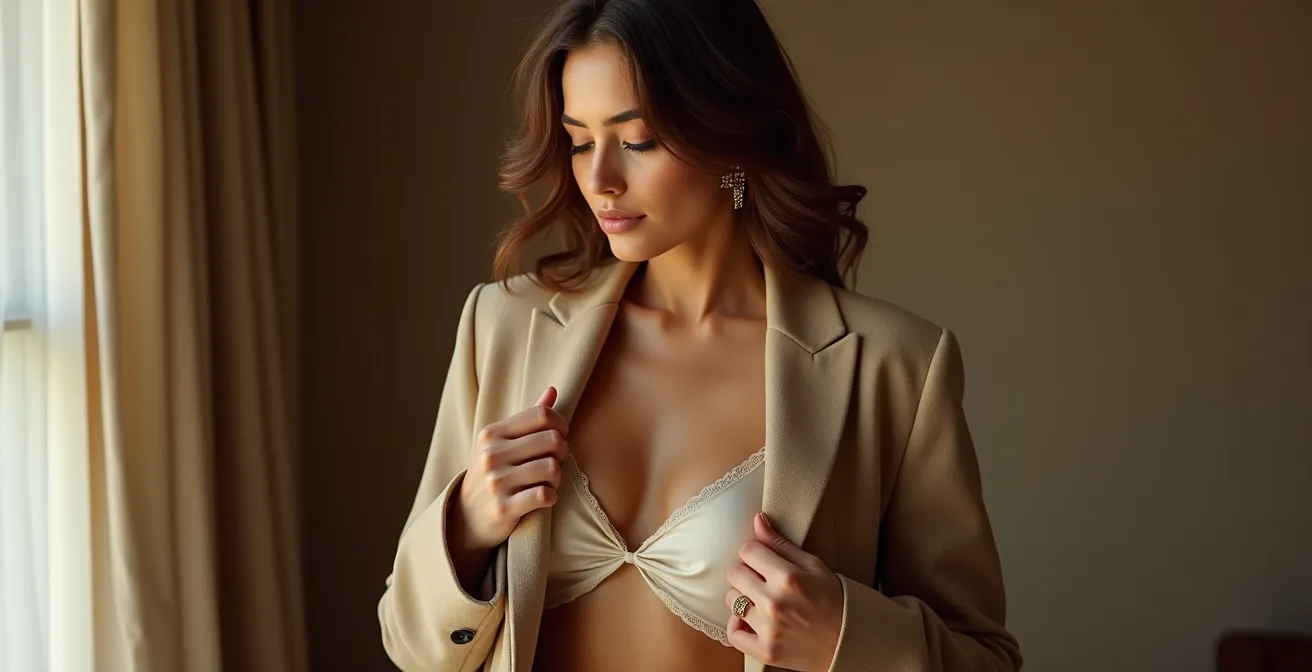
The second key to elevated layering is a focus on textural dialogue. Combine different materials to add depth and luxury. A simple cotton baby tee gains new life when layered under a silk slip dress. The interplay between the humble cotton and the lustrous silk is inherently sophisticated. The goal is to ensure each layer feels purposeful. Use fashion tape or strategic tucking to control how the layers fall, ensuring the final look is polished and not sloppy.
Frosted Lipgloss Then and Now: 3 Updates for a Polished 2024 Look
The frosted lip was the definitive beauty statement of the Y2K era, characterized by its icy, often glitter-laden shine. Bringing it into a modern, professional context requires a significant update in both product and application. The mistake would be to simply pull out an old-school, sticky gloss loaded with chunky glitter. The 2024 interpretation is about achieving a luminous, “wet-look” shine with a sophisticated shimmer, not a gritty frost. This is made possible by significant advancements in cosmetic chemistry.
The evolution in formulation is key to the modern frosted look. As beauty experts point out, today’s products are a world away from their predecessors. This technological shift is what makes the trend wearable again for adults.
Case Study: The Evolution of Lip Gloss Technology
The difference between a 2000s frosted lip and a 2024 luminous lip lies in the formula. Modern glosses use finely milled pearlescent pigments suspended in hyaluronic acid-infused formulas. This technology replaces the chunky, often plastic-based glitter particles of the 2000s that created a gritty, tacky texture. The result is a smooth, high-shine “wet look” that provides dimension and hydration without the stickiness or juvenile sparkle of the original trend.
To wear it well, follow three modern rules. First, choose the right undertone: opt for glosses with warm, champagne, or rose-gold pearls rather than the cool, silver-white frosts of the past. These warmer tones are more flattering on adult skin. Second, practice the “spot-frosting” technique: apply a neutral, satin-finish lipstick or liner first, then dab the shimmery gloss only onto the center of your bottom lip. This creates subtle dimension without overwhelming your look. Finally, remember the one-shine rule: if you’re wearing a frosted lip, keep your eye makeup matte or satin. A frosted lip paired with frosted eyeshadow is the fastest way to look dated.
Toy Sales Driven Scripts: How Merchandise Dictates Character Survival?
To truly understand the Y2K aesthetic, we must look beyond the clothes themselves and examine the commercial culture that produced them. The title of this section, while seemingly about toys, points to a crucial aspect of the era: the “merchandise-first” model of media and entertainment. From pop stars to blockbuster films, character designs and outfits were often developed with an eye toward creating easily packageable and repeatable looks for dolls, apparel, and accessories. This has a direct implication on why the fashion of the era feels so distinct and uniform.
This approach created a feedback loop where media dictated mainstream fashion. As fashion researcher Katherine Saxon explains, this model had a profound effect on the clothes we all wore.
The ‘merchandise-first’ model of Y2K-era toys and media created a uniform of repeatable, easily packaged outfits that directly shaped the mainstream fashion aesthetic.
– Katherine Saxon, TheVOU Fashion Research
This insight is critical for the adult woman styling Y2K today. It explains why so many of the era’s trends feel costume-like: they were, in some ways, designed as costumes. Recognizing this allows you to deconstruct the aesthetic more intelligently. Instead of trying to replicate an entire “packaged” look (like that of a Bratz doll or a pop star), you can isolate the individual components—the silhouette of the pants, the texture of a top, a specific color palette—and integrate them into a more personal and sophisticated style. Understanding that you are referencing an aesthetic born from commercial uniformity gives you the freedom to break that uniformity with your own individual taste.
Why Do We Pay 300% More for a Screen-Printed Cotton T-Shirt?
The Y2K revival has created a booming, and often bewildering, resale market. Authentic vintage pieces, particularly those from coveted brands like Juicy Couture, Von Dutch, or designer collaborations of the era, are commanding prices that seem disproportionate to their original value. A simple screen-printed t-shirt or a velour tracksuit can sell for hundreds of dollars. This phenomenon isn’t just about inflation; it’s a lesson in perceived value, scarcity, and cultural capital. We are not just paying for cotton and ink; we are paying for a tangible piece of nostalgia and the status that comes with owning an “authentic” original.
The premium is driven by a convergence of factors. First, the limited supply of well-preserved vintage items creates genuine scarcity. Second, the demand is supercharged by social media, where these items function as social signifiers. Owning a real vintage piece signals a deeper level of commitment to and understanding of the trend than simply buying a fast-fashion replica. This dynamic has created staggering markups, especially for high-profile items. For instance, industry data shows a 315% average markup in the resale market for Y2K designer collaborations.
Boutique owners and resale platforms have seen this demand firsthand. Many report that authentic Y2K collections sell out within hours of being listed, driven by a fear of missing out and the desire for originality.
Customers were coming in spending hundreds of dollars, and one customer even offered to buy out the entire store after our Y2K vintage collection went viral on TikTok.
– Boutique Owner, Key to Fashion
For the discerning buyer, this means making strategic choices. Instead of chasing every hyped-up micro-trend, focus on iconic but versatile pieces that will hold their value and can be styled in multiple ways. A classic designer baguette bag, for example, is a smarter investment than a novelty t-shirt. It’s about buying into the aesthetic, not just the fleeting hype.
Key Takeaways
- Adopting Y2K as an adult is about translation, not replication. Focus on principles of proportion and texture.
- Authenticity matters. Learn to spot real vintage to add character and value to your wardrobe.
- Modernize Y2K staples by choosing updated silhouettes (like mid-rise denim) and leveraging new product technology (like modern lip gloss formulas).
Transforming a Basic Outfit: The 3 Accessories That Elevate Your Look Instantly
If you’re hesitant to fully commit to Y2K clothing, accessories are the most effective and sophisticated entry point. They allow you to inject the trend’s essence into your look with minimal risk and maximum impact. A well-chosen accessory can transform a classic, even conservative, outfit of a blazer and trousers into something current and conversation-starting. In a global resale market that is projected to reach $64 billion by the end of 2024, investing in quality vintage accessories is not just a style choice, but a smart one.
Instead of reaching for overtly juvenile items like butterfly clips or plastic chokers, focus on three categories of accessories that translate beautifully into a polished, adult wardrobe:
- The Structured Baguette Bag: This is arguably the most timeless accessory from the era. Look for a vintage Fendi, Prada, or a quality leather unbranded version. Its slim, shoulder-hugging silhouette is elegant and works seamlessly with modern tailoring. Opt for neutral colors or subtle logo prints for maximum versatility.
- The Metal-Hardware Belt: A belt with a prominent, sculptural silver or gold buckle worn on the hips of trousers or over a simple knit dress is a powerful Y2K statement. It defines the waist (or hips) and adds a touch of the era’s signature “bling” in a way that feels architectural and chic, not cheap.
- Tinted, Rimless Sunglasses: While tiny sunglasses can be tricky, the rimless, lightly tinted styles of the early 2000s are making a major comeback. A pair with a subtle pink, blue, or yellow lens adds an instant dose of cool and personality to any outfit, from a weekend t-shirt and jeans to a formal suit.
The power of these accessories lies in their ability to signal the trend without overwhelming your personal style. They act as intentional accents, proving that you are referencing the aesthetic with knowledge and confidence. One or two of these pieces is all you need to show you’re in the know.
By focusing on translating the energy of Y2K through the sophisticated lenses of proportion, texture, and intention, you can confidently participate in one of today’s most talked-about trends. The next logical step is to audit your own wardrobe and identify the contemporary pieces that can serve as a foundation for these Y2K accents.
Frequently Asked Questions About a Modern Y2K Aesthetic
Can I wear frosted lips to a professional setting?
Yes, by using the ‘spot-frosting’ technique. Apply a shimmer gloss only to the center of the bottom lip over a nude or satin base for subtle dimension that is perfectly appropriate for the office.
What’s the biggest mistake with Y2K lip trends?
The most common mistake is combining frosted lips with frosted eyeshadow. The 2024 rule for a sophisticated look is one frosted element maximum per look to maintain balance and modernity.
Which undertones work best for modern frosted lips?
For a more sophisticated and flattering effect, choose pearlescent glosses with warm undertones (like champagne or rose gold) rather than the cool, stark silver-white frosts that were popular in the 2000s.